Should building safety rely on tradition… or prevention?
Airis stove guard uses cutting-edge, AI-powered sensing technology to monitor cooking activity and cut power to the stove should danger arise.
 Flexible mounting options
  Trusted by 25 major accommodation providers

North Wales FRS experienced multiple callouts to unattended cooking fires, including multi-apartment damage from sprinkler systems. As a result, the fire service set up a study in cooperation with Flintshire Council to investigate the effect of stove guard technology on preventing kitchen fire and smoke incidents in council-run tower blocks.
Learn more about how Airis stove guards proved a cost-effective method of preventing cooking fires and dramatically cut the number of alarms raised:
Read the case studyBS EN 50615-compliant devices such as Airis stove guard offer numerous benefits when compared with traditional suppression systems like sprinklers and extinguishing hoods:


“We selected the Airis BS EN 50615 system for the Hallsville Quarter development for its widespread use across the UK as well as its reliability and fail-safe design. With cooking fires accounting for approximately 50% of domestic fires, the system significantly enhances safety across the development. By preventing fires at their source, we're also reducing the likelihood of sprinkler systems being unnecessarily triggered, minimising potential water damage and disruption to residents.”– Marc Campbell, Hanover Building Services
Airis is the superior choice for fire safety design. Traditional fire safety methods, such as smoke and heat detectors, fire extinguishers, and fire blankets can all be effective in limiting the damage and injury caused by kitchen fires, but they do nothing to prevent the fire starting in the first place.
Airis stops fires before they start. Using cutting-edge, AI-powered multisensor technology, Airis keeps a constant watch on the stove, monitoring cooking temperature, air temperature, smoke and steam, and human presence at the cooker. If temperatures become too high and cooking is left unattended, Airis acts swiftly to cut the power to the stove, preventing hob fires from ever starting.
If you don't find an answer to your question below, please visit our Knowledge Base
Airis is used in private homes and by housing associations, universities, local authorities, and fire services.
Yes. Airis technology is truly fail-safe. Other stove guards can be bypassed, in the event of a fault, by switching the power off and on at the wall. While other stove guards rely on a single infrared sensor, Airis stove guards use several high-tech sensing devices and AI-driven algorithms to ensure the power is cut at the earliest time without false alarm.
Airis is ideal for people living with neurodegenerative diseases, as well as those with cognitive and/or physical impairments, such as compromised mobility or eyesight. The person cooks on the hob in the way that they always have done, while being protected by Airis from a cooking fire.
Airis stove guards can greatly reduce the amount of toxic smoke from cooking oil becoming overheated, but can't eliminate it. Airis cannot prevent a pan boiling dry and creating smoke, however these situations are extremely unlikely to lead to a fire.
All Airis products come with a 2-year manufacturer's warranty. Unicook provides a 3-year warranty upon registration.
Yes. Airis works with all hobs/stoves up to 90cm wide powered by electricity, including induction, ceramic/halogen, and older 'iron ring' style hobs.
For this application, a ceiling-mounted version of Airis is available called the Airis-C.
Airis is only for electric hobs (all types).
For more information on Airis stove guard and how it can be integrated into your fire safety strategy, get in touch with our team. We also offer CPD-accredited presentations on fire safety standards, including BS EN 50615.

Rated 5 stars by our customers

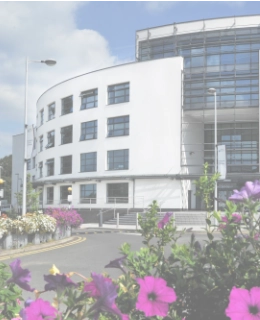
North Wales Fire and Rescue Service has experienced a number of incidents at the Flintshire Council-run tower blocks Bolingbroke Heights, Castle Heights, and Richard Heights, resulting from unattended cooking fires. In response, the fire service set up a study in cooperation with the council and Unicook Ltd to assess the effect of stove guard technology in preventing the tower block fire and smoke incidents. The Unicook Airis product was chosen in part for its built-in data recording.
“The council has experienced incidents placing residents at considerable risk with extensive (multi-apartment) damage from the sprinkler systems. In June 2021, an elderly gentleman was admitted to hospital with burns caused by a flash-over in an oil pan fire. Ten apartments were damaged by water following this incident. The council was therefore keen to find a cost-effective solution to protect the lives and wellbeing of residents as well as the properties. Having served in the fire service myself, I was particularly interested to see what impact stove guard technology could have.”
– Mike Dymock, Contract Surveyor (Fire Risk), Flintshire County Council
A ‘stove guard’ is a device that cuts the power to a cooker or hob to prevent a fire. These are distinct from PIRs and timers etc as they only intervene when they determine there is a risk of fire. They prevent fires, and to a large extent smoke, resulting from unattended cooking.
The first stove guard was invented by a Swedish company called Cabinova in the 1980’s. The technology has now advanced considerably. In 2010, Norway mandated stove guards for all domestic kitchens. In practice, this meant that a stove guard must be installed in a new house or when a kitchen is renovated. Norway’s action created a substantial market for stove guards and led to considerable investment in developing the technology. There are now over 1 million devices installed in Europe. In the UK, 3 brands are available, namely Firechief Kitchen stove guard, Prefect Hobsensus and the Unicook Airis Sense.
In 2015, several manufacturers were consulted to create a pan-European standard to ensure stove guard products are tested and proven effective and, ultimately, to prevent stove guards from being confused with non-compliant cut-off devices triggered by timers or PIRs.
Stove guards consist of a sensor unit which fits to the wall/splashback behind the hob/cooker, to the underside of the extraction hood, or on the ceiling. A power controller (‘interrupter’) is wired between the power outlet at the wall and the hob/cooker. This is mounted behind a cooker or, in the case of a hob, usually behind the oven below. The sensor and power control units are linked by radio. An electrician is required for the installation, but no specialist training is needed.
A sample of 42 apartments was fitted with a stove guard following individual assessments by the fire service and the council to identify residents considered to be at higher risk. At the end of the study, incident data from the council’s community alarm system both prior to and during the study would be compared. Data from the stove guards would give detailed information about cooking sessions and potential incidents prevented. It would also provide a comparative risk profile of individual residents. The stove guards were installed between March and August 2021 and the results were assessed using data collected up to 20th June 2022.
During the study period, there was one community alarm triggered by cooking. This compares with 9 during a similar period preceding the introduction of stove guards. While the Airis stove guard can in many cases react before significant smoke is produced, this depends on many variables and it is not possible in every case. However, in one such case, the community alarm was triggered by a smoking pan and the fire service was called. When the firefighters gained access to the property, they found that the stove guard had cut the power and had likely prevented a fire.
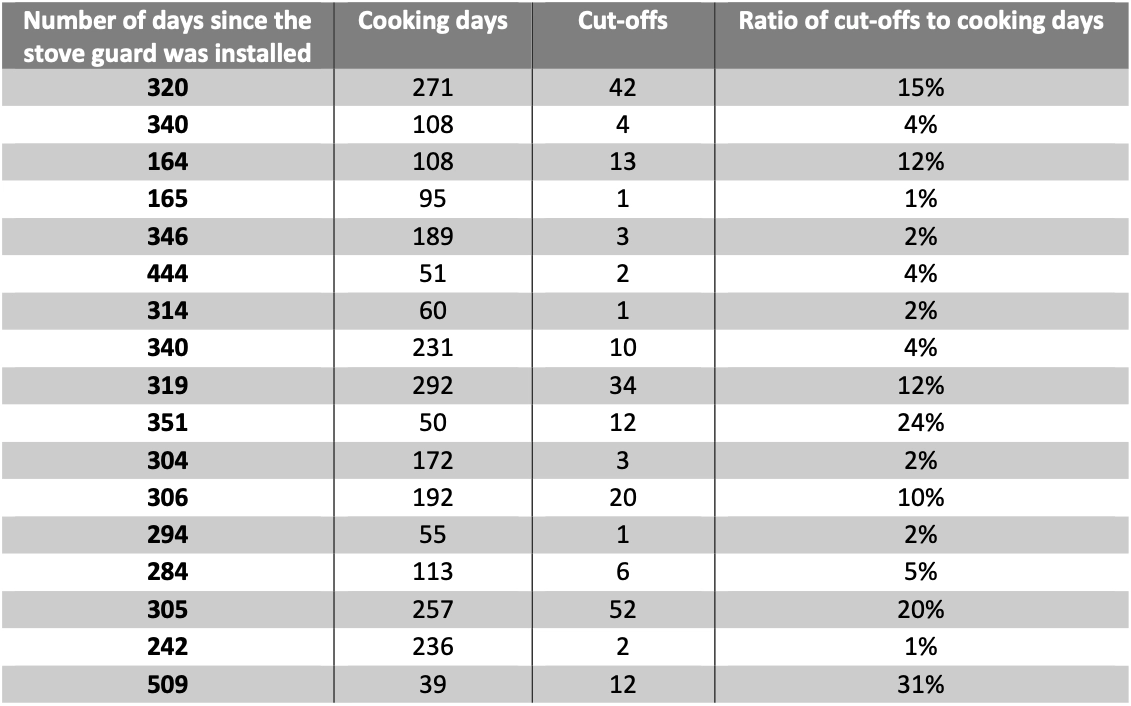
Airis cuts the power to prevent smoke, fires and damage to pans by analysing data from many sensing devices, and not all shut-offs would have prevented a fire. Although we cannot say with certainty how many fires may have been prevented, surface temperature data suggested that fires could have occurred without the stove guard’s intervention. The widely varying ratio of activations to the number of times someone cooked reflects the varying degree of risk that a resident might leave cooking unattended or accidentally leaving a ring on after cooking. Most people occasionally leave cooking unattended or leave a ring on after cooking and therefore an occasional shut-off can be expected. However, as the data illustrates, in one case, the system intervened in almost 1 in 3 cooking sessions.
The study has helped to reinforce our knowledge of the efficacy of BS EN 50615 certified technology. I would like to thank Flintshire Council and Unicook for their cooperation.