
Specifying Stove Guards: Installation, Integration, and Common Questions Answered
For those working in construction, fire safety can mean the difference between compliance and catastrophe. When it comes to kitchen fire prevention, stove guards stand out as one of the few technologies that proactively prevent fires rather than merely detecting or suppressing them.
Stove guards are becoming increasingly more important for architects, fire designers, M&E consultants, and electrical installers working across housing developments, assisted living schemes, and HMOs. Yet, despite their life-saving potential, there’s still some uncertainty around when and how to specify them, their installation, and how they integrate with wider systems like telecare or BMS.
In this guide, we’ll break down the most common questions professionals ask—from wiring and compatibility to best practices and inspection readiness. Whether you’re specifying for a new build or retrofitting an existing scheme, this article will aim to give you a clear, pragmatic walkthrough.
1. What is a Stove Guard?
A stove guard is a proactive fire prevention device designed to stop cooking fires before they start. It typically includes:
- A sensor unit, mounted above the hob
- A power controller (PCU), connected to the cooker’s power supply The sensor monitors cooking conditions in real-time, identifying risks like excessive heat or unattended cooking. If it detects danger, it instructs the PCU to cut power to the stove.
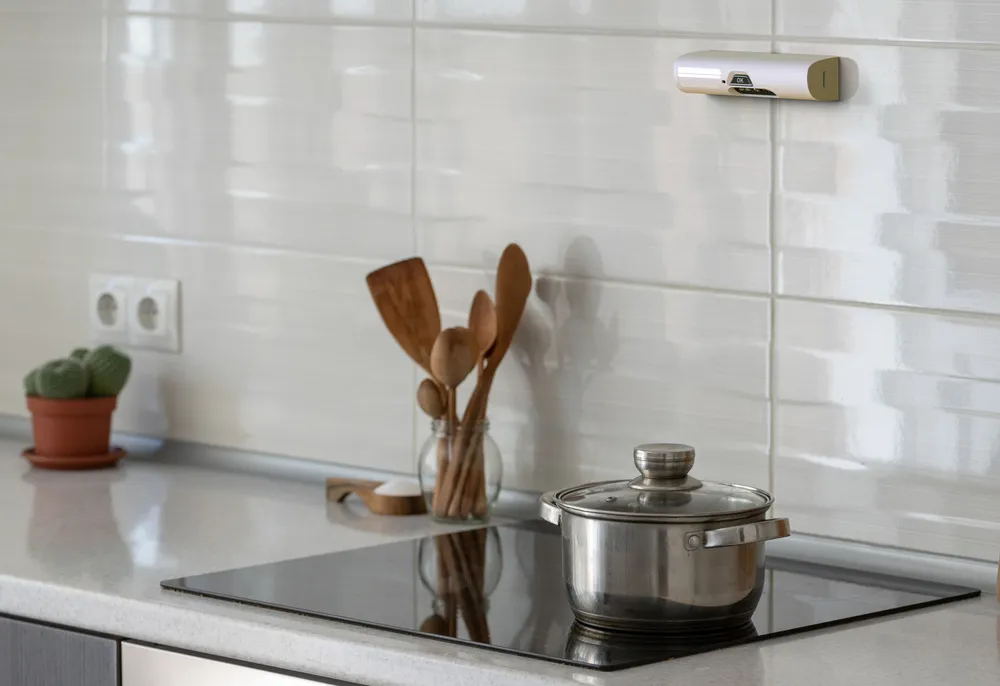
Modern systems like Airis use smart algorithms to distinguish between normal and risky cooking behaviour. That means no false shutoffs when searing a steak or boiling pasta—just reliable prevention.
Stove guards proactively prevent fires without false alarms or disruption.
2. Why Specify Stove Guards?
In high-risk residential environments, stove guards are increasingly considered essential:
- Supported and extra-care housing
- Studio flats with escape distance constraints
- Housing for older adults or those with cognitive impairments
- Student accommodation and HMOs
- Temporary and social housing

Why stove guards matter:
- Prevention over detection – Unlike smoke alarms or sprinklers, stove guards intervene early.
- Less water damage from sprinklers – Stove guards reduce sprinkler system activations by 50%.
- Reduced boil-over risks – Prevent dangerous boil-overs (sometimes call flashovers) as a result of a sprinkler system pouring water into a hot oil pan.
- Fewer callouts – Case studies show substantially reduced fire service callouts.
- Compliance support – Conforms to BS EN 50615 Category B, helps meet BS 9991:2024 and housing safety strategies.
- Future-proofing – Stay ahead of evolving standards, especially for vulnerable occupants.
- Operational benefits – Reduced insurance claims, downtime, and risk. Stove guards helps designers to demonstrate duty of care.
3. Technical Overview: Installation and Placement
Power Supply and Wiring
Stove guards like Airis work with standard cooker circuits:
- 230V AC power supply
- Up to 35A MCB for the Airis stove guard The sensor runs on AA batteries (3–7 years of life) and communicates wirelessly with the PCU.
Sensor Placement
The sensor is mounted 50–70cm above the midline of the hob, typically on a splashback or cooker hood. Airis supports all electric hobs up to 90cm.
Refer to our installation guides for details.
Installation Time and Tools
- Installation time: < 45 minutes.
- No kitchen rewiring or appliance modification required; only the wiring of the PCU between the mains and the stove.
Common Pitfalls
- Incorrect sensor height.
- Lack of user guidance can lead to confusion in assisted living settings - make sure that the end users are aware of what a stove guard is and how to reset the sensor after an intervention. Airis stove guards are quick and easy to install, with no kitchen rewiring or chasing of cables required.
4. Integration: Standalone and Connected Options
Standalone Simplicity
Stove guards function independently. They don’t require interfaces with other systems and ensure reliable, automatic protection. However, some stove guards, like Airis, can be connected to a wide range of other systems.
Optional Integration
In more complex schemes, some stove guards can link to:
- Telecare systems – via volt-free output
- Fire alarms – for event logging (as opposed to triggering the fire alarm)
- BMS – for risk monitoring and audit trails The Airis Sense Wi-Fi model adds Wi-Fi for alerts via SMS or email and smart building integration.
Best Practice Tip
Avoid over-engineering: Too many interfaces can complicate commissioning. For integration advice, contact our team.
5. Stove guard FAQs for Specifiers and Installers
Q: How is it powered?
- PCU: mains powered
- Sensor: battery-powered (3–7 years battery life)
Q: What maintenance is required?
- Minimal: periodic battery checks only; occasional wipe of the sensor lenses to remove grease build-up. No servicing is required.
- The Airis stove guard is uniquely fail-safe. If anything goes wrong, cooking is prevented.
Q: Can it be retrofitted to existing kitchens?
- Yes, with minimal disruption.
Q: What is the installation time?
- < 45 mins for trained electrician; < 25 mins when installing multiple units.
Q: Any user interaction required?
None required during cooking—fully automatic. After a cut-off, power is reset at the press of a button on the sensor.
6. Compliance, Inspections, and Documentation
Stove guards support compliance by addressing root causes of cooking fires. Here’s what inspectors look for:
- Mitigation of cooking-related fire risks
- Documentation of installation and function
- Compliance with BS EN 50615, BS 9991:2024, and BS 7671
- Suitability for tenant profile
What to Provide at Handover
- Manufacturer’s instructions
- Confirmation that the stove guard has been installed and tested in accordance with the manufacturers instructions
- Installation checklist
- Sticker on the wall if the customer wishes Get all documentation here: Airis Stove Guard Docs.
7. Support and Training Resources
CPD and Specification Support
We offer CPD-accredited sessions covering:
- Domestic fire risks
- How BS EN 50615 devices work
- Increased fire risk with Induction hobs
- Videos of real life cooking fires and prevention
- The strengths and weaknesses in current standards Book a CPD session.
Installer Training
We also provide training sessions and guides for installers—ensuring correct installation, fewer site returns, and smoother handovers.
Site-Specific Advice
Every project is different. For tailored technical support, just get in touch.
Conclusion
Kitchen fires are the UK’s most common cause of residential fires. Stove guards help you prevent them—before they start.
From student blocks to high risk buildings, these devices support compliance, reduce risk, and demonstrate a proactive safety approach. And with simple installation and no user intervention, they offer unmatched peace of mind.
If you’re ready to specify stove guards in your next project, our team is here to help. Contact Unicook today for expert advice, technical docs, or CPD training.
If you have questions, we’re here to help
We can call you back, or you can contact us by phone on 0208 798 3462 or click on ‘Contact Us’ to send us a message.

Rated 5 stars by our customers