The safest cookware for induction hobs: what to look for and what to avoid
- domestic fire safety
Most guides to induction cookware focus on compatibility — whether a pan will work at all. This one focuses on something more important: which choices make cooking on an induction hob safer, and which introduce risks that are easy to overlook.
Why cookware matters more on induction than on any other hob
Induction hobs work differently from gas or ceramic cookers. Rather than heating a surface that then heats the pan, induction creates a magnetic field that heats the pan itself directly. This makes induction highly energy-efficient — but it also means heat builds extraordinarily quickly.
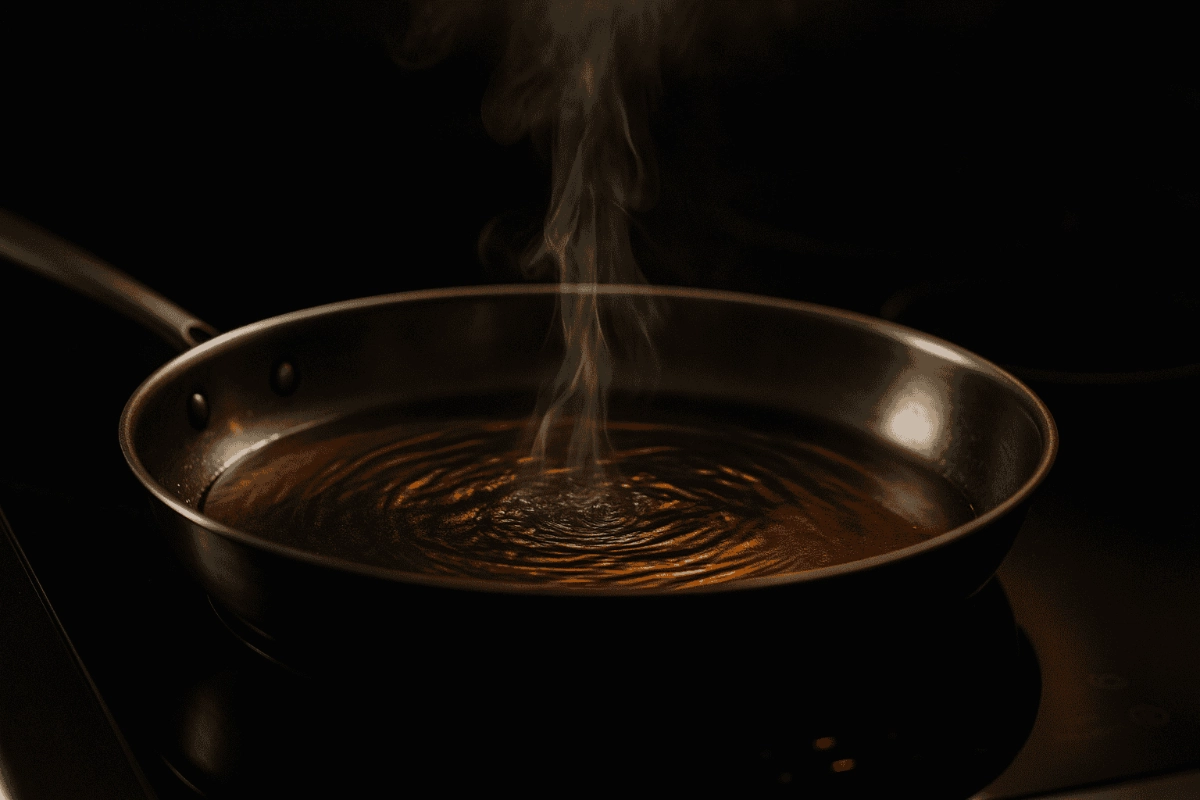
Cooking oil on an induction hob can reach dangerous temperatures in as little as 80 seconds[1]. On gas or ceramic, that process takes considerably longer, giving you more time to notice if something is going wrong. On induction, a moment’s distraction can be the difference between a meal and a kitchen fire.
This is why cookware choice matters. The pan you use directly affects how fast heat builds, how evenly it distributes, and how much warning time you have before oil approaches ignition temperature. Cooking appliances remain the single largest cause of accidental dwelling fires in England — accounting for 44% of all such fires in the year ending March 2025[2]. Induction’s speed means that in a kitchen with an induction hob, the risk of a fire escalating quickly is higher than many people realise.
What makes a pan induction-compatible?
Induction hobs only heat cookware that contains ferromagnetic metal — material that responds to a magnetic field.
Compatible materials include:
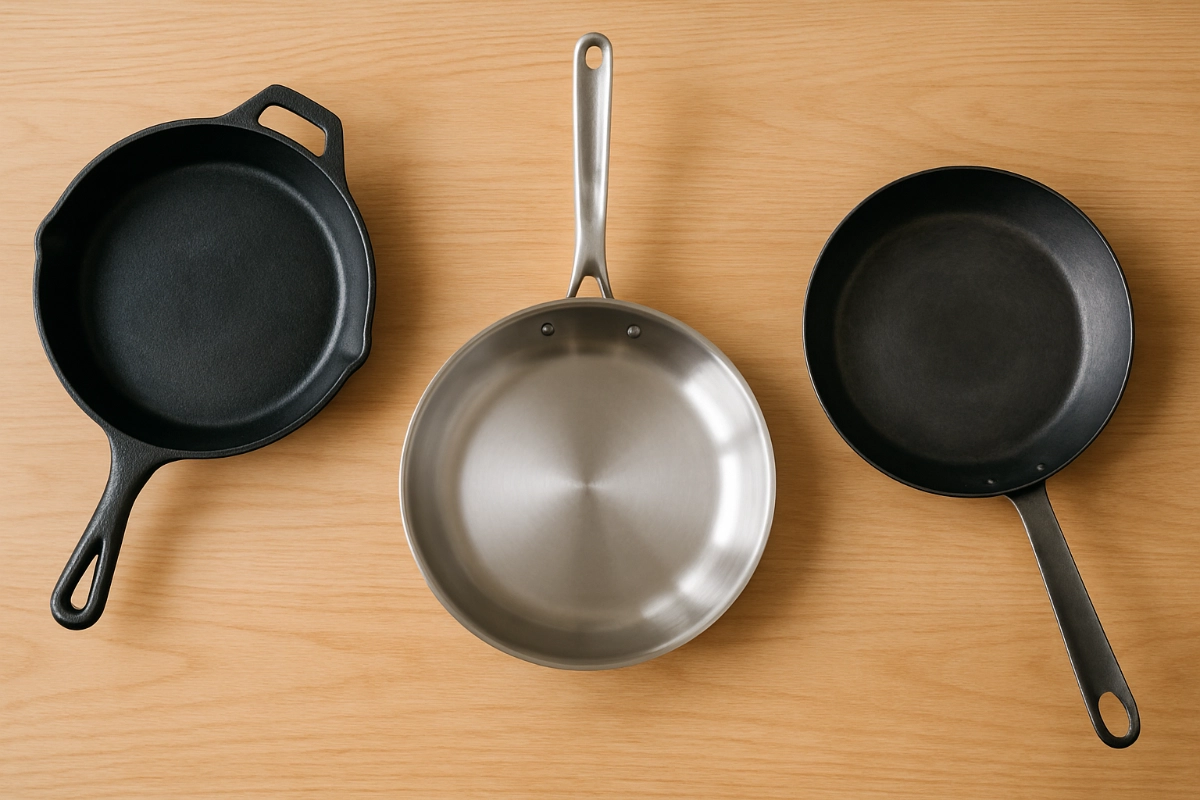
- Cast iron (including enamelled cast iron)
- Magnetic stainless steel (most multi-ply and tri-ply pans)
- Carbon steel
Incompatible materials include:
- Aluminium (unless it has a bonded magnetic base)
- Copper
- Glass
- Ceramic
- Non-magnetic stainless steel
Here’s a simple test: If a magnet sticks firmly to the base of a pan, it will work on induction. If it doesn’t, it won’t.
This magnet test is consistent with guidance from major hob manufacturers: NEFF, AEG and Electrolux all specify a magnetic, ferromagnetic base as the fundamental compatibility requirement for induction cookware[3].
Compatibility is the minimum requirement — but it tells you nothing about how safely a pan will behave on a powerful induction hob.
The safety case for each material
Magnetic stainless steel (multi-ply construction)
For most people, a well-constructed multi-ply stainless steel pan is the safest everyday choice for induction cooking.
The key is construction. Multi-ply pans — those with several bonded layers of different metals (typically stainless steel on the outside, aluminium or copper in the core) — distribute heat far more evenly than single-layer pans. This matters because uneven heat distribution creates hot spots where oil can reach ignition temperature before the rest of the pan has had a chance to reflect that in how it looks or smells.
As a rule, the thicker and more complex the construction, the more controllable the pan’s response to induction heating. Five-ply pans offer better heat distribution than tri-ply; tri-ply is better than a single-layer magnetic base. If you cook with oil regularly on induction, this is worth paying for.
Limitation: Stainless steel can be harder to clean and may need more oil to prevent sticking.
Cast iron (and enamelled cast iron)
Cast iron is an excellent, safe material for induction cooking — but it requires a specific awareness.
Because cast iron retains heat so effectively, it stays very hot long after the hob has been switched off. This is a genuine hazard: a cast iron pan that appears to have “cooled down” can still be hot enough to cause burns or ignite materials left in contact with it. Never leave flammable materials — cloths, oven gloves, packaging — near a cast iron pan after cooking.
The other consideration is weight. A heavy cast iron pan is less likely to be knocked off a hob accidentally, but it’s also harder to remove quickly if something goes wrong. If you’re cooking for someone who has limited strength or mobility, lighter alternatives may be more practical.
Enamelled cast iron (such as a Dutch oven or casserole dish) behaves similarly. The enamel coating makes it easier to clean and removes the need for seasoning, but it shares the same safety considerations as uncoated cast iron.
Limitation: Very heavy. Retains heat long after switching off — plan accordingly.
Carbon steel
Carbon steel pans are popular with professional cooks because they’re lighter than cast iron but can handle high temperatures. They’re fully induction-compatible and, when properly seasoned, develop a naturally non-stick surface.
The safety caveat is their thinness. Thin carbon steel pans respond to induction heat very rapidly — more rapidly than thick stainless steel or cast iron. This makes them more demanding to use safely, particularly for oil-based cooking. They reward close attention and lower heat settings; they punish inattention.
If you enjoy the cooking properties of carbon steel, choose a pan with a heavier gauge (thickness) rather than a budget option, and be particularly careful when heating oil.
Limitation: Rapid heating response requires more attention; thin versions are higher risk with oil.
Base thickness: the detail that most guides skip
The single most important safety-relevant characteristic of a pan for induction cooking is base thickness.
A thick, flat base does two things. First, it distributes heat more evenly across the cooking surface, reducing hot spots where oil can overheat locally before you notice. Second, it slows the rate at which temperature builds, giving you more reaction time if you’re distracted or the hob setting is higher than intended. Electrolux and AEG both advise that induction cookware should have a base that is as thick and flat as possible[4][5] — practical manufacturer guidance that happens to align directly with the safety case.
Cheap pans with thin stamped bases behave very differently on induction. They heat unevenly and rapidly — useful in a professional kitchen where every second counts, but a liability in a domestic setting where cooking is often done while managing other things at the same time.
When buying cookware for induction, check the base thickness and construction. Pans that describe their construction as “tri-ply” or “5-ply” with a full clad (not just a disc base) will generally offer better and safer performance than those that don’t specify.
Pan size and base diameter
On an induction hob, the pan’s base needs to cover the induction zone for efficient, even heating[3][4]. Using a pan that is significantly smaller than the zone doesn’t prevent the hob from working, but it reduces cooking efficiency — the zone generates power that the smaller base can only partially absorb.
Check your hob’s zone sizes and try to match your most-used pans to the appropriate zones.
What to avoid: habits that increase risk regardless of pan choice
Your choice of cookware sets a baseline, but habits matter just as much.
Never place cloths, towels, or paper under your pan. Some people place a cloth between the pan and the hob surface to prevent scratching. On induction, this is extremely dangerous — the material can ignite rapidly if temperatures rise, even if the hob surface itself doesn’t feel hot.
Never use Boost with oil. The Boost or PowerBoost function on induction hobs is designed for rapidly boiling water. It delivers maximum power to the pan, and with oil in it, temperatures can reach dangerous levels within seconds. Use moderate heat settings when frying.
Don’t leave items stored on or near the hob. Items left on or beside an induction hob — including packaging, tea towels, or other cookware — can be a hazard. The hob surface itself can reach high temperatures from contact with a hot pan even after the cooking zone has switched off.
Don’t walk away from oil heating in a pan. This applies to every hob type, but the speed of induction makes it non-negotiable. If you need to leave the kitchen, turn the hob off.
What if the pan overheats anyway?
Good cookware and careful habits significantly reduce the risk of oil overheating — but they don’t eliminate it. The safest kitchens combine good habits with a technology backstop.
A stove guard — such as Airis Sense — monitors cooking conditions at the hob and automatically cuts power before oil reaches ignition temperature.
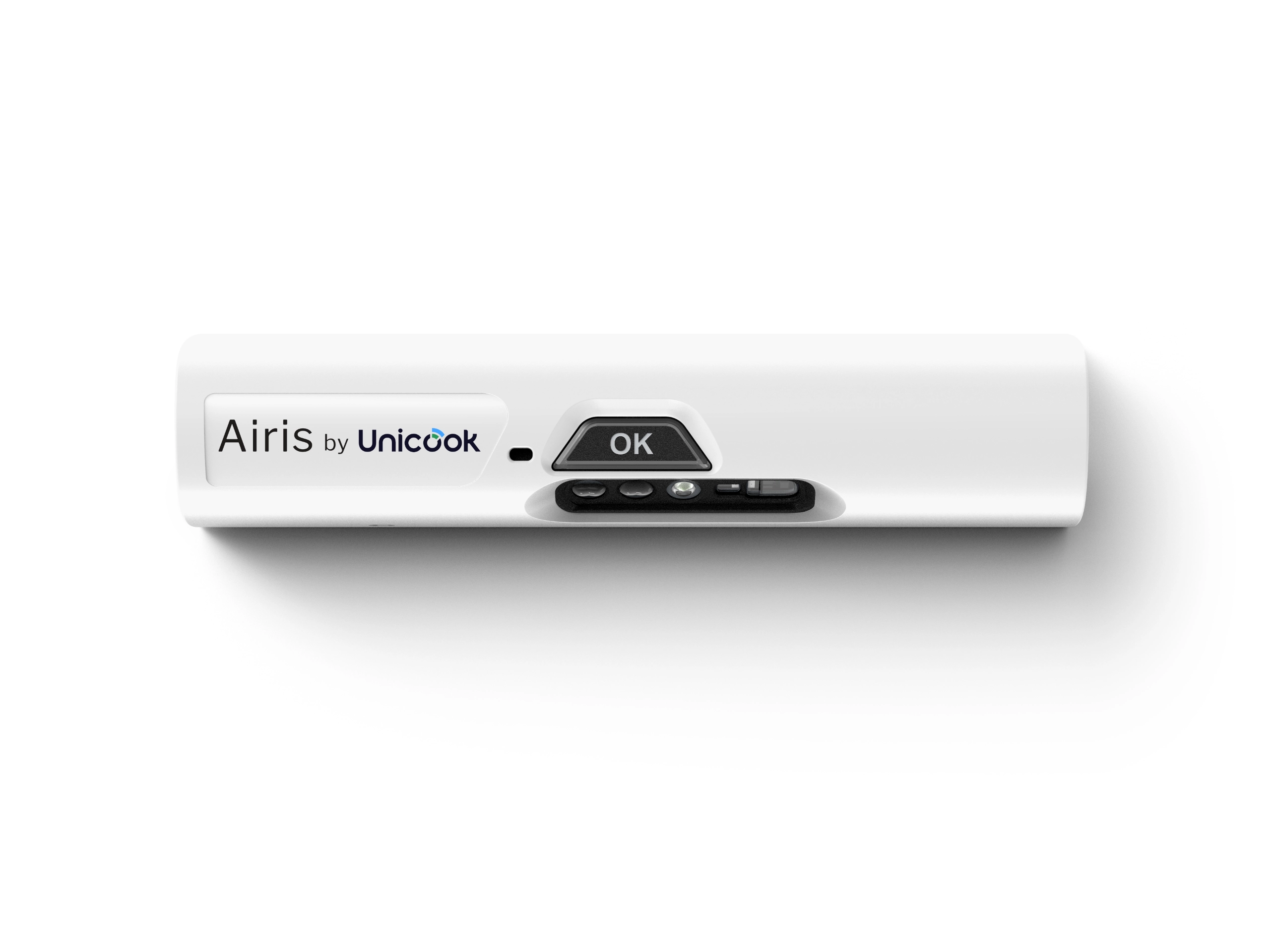
Greater Manchester Fire and Rescue Service notes that cooker cut-off devices can help prevent fires by cutting power to electric cookers when risky conditions are detected[6]. It acts as a safety net for the moments when attention lapses: a pan left on while you answer the door, or oil left heating while you’re distracted. For more on how induction hob fire risk works and what you can do about it, see our full guide to induction hob fire safety.
Frequently asked questions
Do I need special pans for an induction hob?
Yes. Induction hobs only work with cookware made from ferromagnetic metals — such as cast iron or magnetic stainless steel. The simplest check is to hold a magnet to the base of the pan: if it sticks firmly, the pan is compatible.
Are non-stick pans safe on induction?
Non-stick pans with a magnetic base will work on induction. The safety consideration is overheating: non-stick coatings can degrade at high temperatures, which on induction can be reached quickly. Use non-stick pans on lower to moderate heat settings and never leave them unattended on high heat.
Is cast iron safe on induction?
Yes — cast iron is fully induction-compatible and a good choice for even heating. The main thing to remember is that cast iron retains heat for a long time after the hob is switched off. Treat it as hot until it has had ample time to cool completely.
Does pan size matter on induction?
The pan’s base should match the hob zone as closely as practical. A pan with a much smaller base than the zone may concentrate heat unevenly in the pan’s base, increasing the risk of local overheating.
Can I use aluminium pans on induction?
Standard aluminium pans are not induction-compatible. Some aluminium pans have a bonded magnetic stainless steel base, which will work — check the manufacturer’s specification or test with a magnet.
If you have questions, we’re here to help
We can call you back, or you can contact us by phone on 0208 798 3462 or click on ‘Contact Us’ to send us a message.

Rated 5 stars by our customers

Sources
[1] Unicook induction hob fire tests — oil ignition recorded in under 80 seconds on a high-power induction hob; referenced in Why induction hobs pose a serious fire risk
[2] Ministry of Housing, Communities and Local Government — Detailed analysis of fires and response times to fires attended by fire and rescue services, England, April 2024 to March 2025
[3] NEFF UK — Which pans are suitable for my NEFF induction hob?
[4] Electrolux UK support — What cookware is suitable for cooking zones with induction heating?
[5] AEG UK support — What cookware is suitable for cooking zones with induction heating?
[6] Greater Manchester Fire and Rescue Service — Cooker cut-offs