How to Prevent Kitchen Fires: 18 Kitchen Fire Prevention Tips
Please note that the advice on kitchen fire prevention in this post is for informative purposes only. Unicook can’t be held liable for your safety in the kitchen.
Hazards fill the home, and the kitchen presents the most danger. In this article, I’m going to share some tips on how you can make your kitchen a safer place.
Did you know that nearly two-thirds of all domestic fires in the home start in the kitchen? According to the Home Office, they injure over 20 people every day in the UK – that’s 7531 people a year!
In reality, we all face a high level of risk in our homes. The kitchen contains so many ignition sources: toasters to ovens, stoves to microwaves, deep-fat fryers to toastie makers, and so on. Not to mention the abundance of fuels, gas, electricity, myriad exotic cooking oils and fats, and flammable items never far away from a heat source.
So when it comes to home fire safety, the kitchen should be right at the top of your list.
Kitchen Fire Prevention Essentials
- Leaving cooking unattended is a bad idea, as is cooking while under the influence of alcohol.
- Keeping your cooking area clean and organised goes a long way.
- Check your smoke alarm regularly and consider using a stove guard to proactively stop fires from ever starting.
- Learn more about the ignition points of different cooking oils and keep flammable items away from heat sources.
- Avoid wearing loose clothing, or roll your sleeves up. Keep tea towels away from the stove, even if you have an induction stove.
- If your home is old, have the wiring checked. If you have a gas stove, ensure that it’s safe.
- Keep the oven, stove, extractor hood filters and microwave clean from grease. Ensure the toaster is empty and clean of debris before using it.
- Keep children and any pets away from the cooking area, especially if they can reach the stovetop.
- Be prepared for emergencies with the right equipment.
- Install a cooker hood.
- Take education on kitchen fire safety awareness into your own hands.
- Use a modern, plug-in deep-fat fryer. If you must use a stovetop deep-fat frying pan, be attentive and follow advice.
1. Keep your cooking area clean and organised
Keeping your cooking area clean and organised is a quick win for fire safety. Food particles can easily ignite, and a grease fire can develop quickly. Regularly wiping down surfaces, cleaning electrical appliances, keeping electrical cords organised, and storing flammable items away from heat sources can significantly reduce this risk.
An organised kitchen enhances safety by preventing accidental fires and also has the benefit of making cooking more enjoyable.
2. Don’t leave cooking unattended
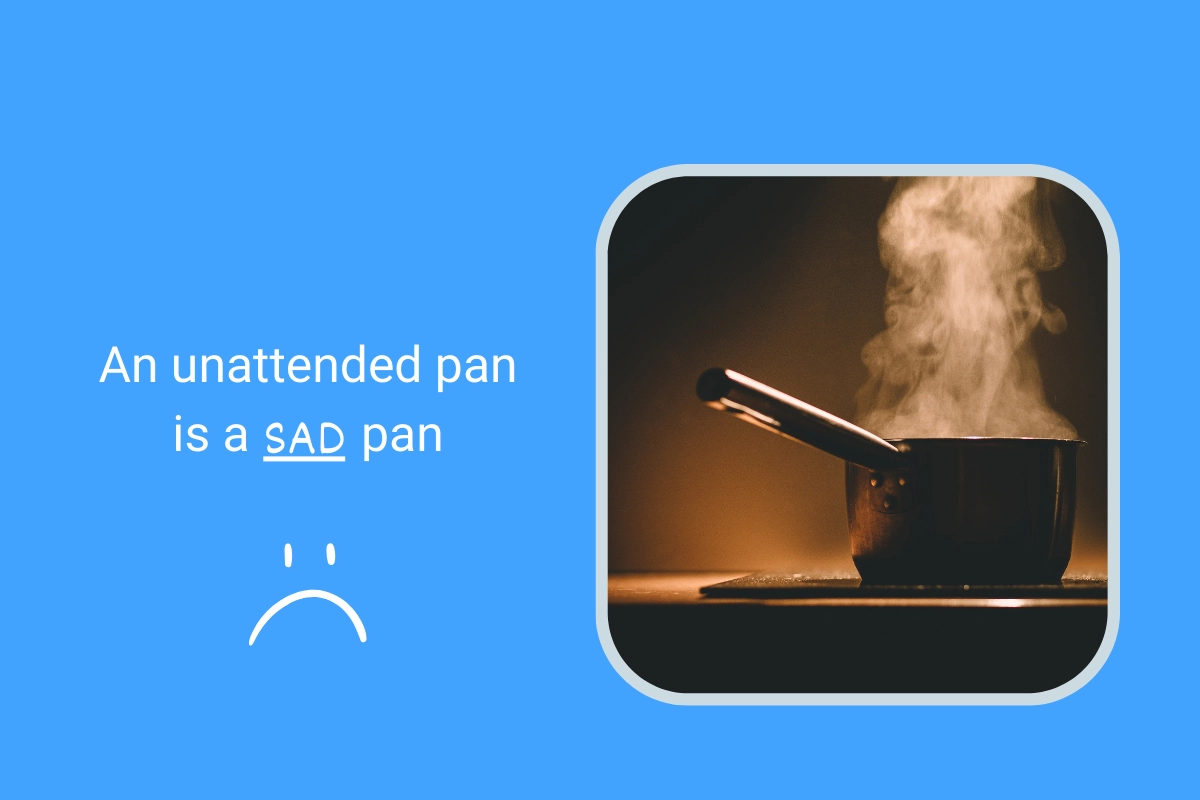
Unattended cooking is a leading cause of kitchen fires. When you step away, even briefly, flames or hot oil can quickly ignite nearby items. Always stay nearby in the kitchen while cooking, especially when using high heat or oil on the stove.
If you must leave, turn off the stove and remove pots and pans from the heat to prevent accidental fires.
Here’s another tip: modern induction stoves heat up much faster than older types. Avoid “boosting” the heat at the start of the cooking to get the pan hot enough, as this habit can easily start fires in under two minutes.
3. Check smoke alarms and their locations
At the risk of joining the broken record bandwagon: check your smoke detectors once a week!
It’s also well worth checking that a smoke alarm is properly installed: is it on the wall (incorrect), or on the ceiling (correct)? Is it close to the kitchen?
For me, the ideal location for a smoke alarm is in the kitchen itself. You’ll often hear advice that this will cause false alarms, but mine is installed in my kitchen and I don’t get any. Even if it did react unnecessarily, it’s surely worth the trade-off because I know it’ll react MUCH faster if the worst should happen.
4. Consider buying a small fire extinguisher
There are varying opinions on whether individuals should tackle fires with a fire extinguisher themselves:
- Don’t tackle the fire, get out and call the fire service
- Use your judgement The bottom line here is that you should do what you feel is right in the situation: if you feel confident that you can manage the situation (and that you know how to operate the right fire extinguisher for the type of fire), then that’s OK. But if you’re in any doubt, just get out of the building.
If you know what you’re doing, consider getting a small fire extinguisher suitable for tackling pan fires (a “wet chemical” extinguisher). Ensure the extinguisher is easily accessible. Ensure you regularly check its pressure and expiry date, and get expert advice before buying one. DON’T use the wrong type of fire extinguisher on an oil fire.
Again one last time, because it’s important: make sure you know what you are doing.
5. Get a stove guard to prevent cooking fires
Get a stove guard like Airis to prevent cooking fires. A stove guard automatically turns off the stove if it detects a dangerous situation. This device is particularly useful in preventing unattended cooking fires, which are a really common cause of kitchen incidents.
Although fire is a scary prospect, it’s more often the carbon monoxide poisoning from the smoke that causes people to lose consciousness. Stove guards react before much of this gas can be emitted, so it isn’t just about preventing a fire.
6. Ensure your clothes can’t catch fire
It’s a good idea to avoid wearing loose clothing when cooking, especially clothes with loose sleeves. It’s surprisingly easy to overlook fabric sitting in the frying pan while stirring its contents. Clothes catch fire quickly!
Roll up your sleeves, or better still, wear clothes that aren’t loose-fit. If you have long hair, tie it up.
7. Educate your household on kitchen fire safety
Educate everybody about kitchen fire safety to ensure the household knows how to prevent and respond to kitchen fires. Teach teenagers about the dangers of unattended cooking and the proper use of fire extinguishers. Explain to younger children why they should stay out of the kitchen. Make sure that everyone uses oven gloves and not a tea towel.
Make it your mission to turn everyone in the house into a fire safety expert; your kitchen will be a far safer place.
8. Learn more about cooking oils
This is a subject close to my heart: when I asked a group of seven of my friends if they knew which oils were safest for stir-frying, only one person could name one of them. It’s hardly a scientific study, but one in seven isn’t great!
I’d be willing to bet that most people don’t know the answer to that question. If you’re curious, the best oils for stir-frying are:
- peanut oil
- rapeseed/canola oil
- grapeseed oil
- sunflower oil
- soybean oil
- light/untoasted sesame oil (my personal favourite) The main takeaway: learn about what temperature each oil starts to burn.
9. Keep tea towels (and food packaging) away from the stove
Keep tea towels away from the stove to reduce the risk of fire. Tea towels are often made of flammable materials, so they can easily catch fire if left too close to burners or hot surfaces. Always store them at a safe distance from the stove, ensuring they are hung or placed where they can’t accidentally fall onto a heat source. This simple precaution helps prevent accidental fires and keeps your kitchen safer.
When you finish cooking, make it a habit to clear everything away from the stove area. Even if an iron-ring or halogen hob is switched off, the residual heat is enough to set fire to a tea towel or melt food packaging.
It’s true that if you have an induction hob then this is much less of an issue. But it’s still a bad idea to keep tea towels near hot oil and hot pans!
10. Check your home’s electrical wiring
Check your home’s wiring to ensure it’s safe and conforms to regs. Faulty or outdated wiring and electrical leads can pose a significant fire risk, especially in the kitchen where high-powered appliances are used. Have a qualified electrician inspect the wiring, particularly around the kitchen area, and address any issues immediately.
This point is especially important if your property wasn’t built in the last 20 years (in the UK, the 17th Edition of the IET Wiring Regulations (BS 7671) was introduced in 2008, with significant amendments made in subsequent years, particularly in 2018 with the 18th Edition).
11. If you have a gas stove, ensure that it’s been recently checked
If you have a gas stove, ensure it’s been recently checked by a qualified professional.
Regular inspections help identify potential leaks, faulty connections, or other hazards that could lead to fires or carbon monoxide poisoning (remember, it’s not just about the fire itself).
Gas appliances should be serviced annually to maintain their safety and efficiency. Keeping your gas stove in good condition helps to prevent the risk of fire and ensure a safer, healthier kitchen.
12. Keep all kitchen appliances clean
Keep all kitchen appliances clean to prevent fire hazards. Grease, food particles, and grime can accumulate in and around appliances, increasing the risk of ignition. Regularly clean the oven, microwave, toaster, and other kitchen devices to ensure they operate safely. Pay special attention to vents, filters (especially extractor hood filters), and heating elements. A clean appliance also works better and lasts longer.
Pro tip: I rarely use my oven, because I hate cleaning it and the time it takes to pre-heat. An air fryer is a great solution for this and uses less energy to get the job done.
13. Use a dedicated deep-fat fryer

This is another one close to our hearts because we’ve seen the real consequences of misusing a deep-fat frying pan on the stove.
PLEASE use a dedicated deep-fat fryer. Deep-fat frying on the stove can be dangerous, as hot oil is prone to splattering and catching fire. A dedicated deep-fat fryer is designed with safety features like temperature control and automatic shut-off, reducing the risk of oil-related fires. It’s a much safer alternative.
If you really must use a chip pan on the stove, be extremely careful – be like a good friend and keep it company!
14. Make the kitchen an adults-only zone
Keeping children and pets out of the kitchen while cooking isn’t always easy, but it significantly reduces the risk of any type of accident, including fires. Curious hands and paws (I’m looking at you, cats) can easily knock over hot pans or get too close to flames. Establish clear rules about kitchen access during meal preparation times to ensure a controlled and safe environment, minimising the likelihood of fire hazards and injuries.
Kids older than three years of age tend to understand this stuff. My five-year-old stays out of the kitchen when we’re cooking because we took the time to explain the “why”.
15. Be prepared for emergencies
First, an extremely important point: NEVER throw water on a pan fire. When water is thrown onto burning oil, it sinks to the bottom of the pan due to its higher density. Upon contact with the hot oil, the water turns into steam rapidly, expanding explosively. This violent reaction can cause the burning oil to splatter and spread, potentially causing an even larger fire.
Keep your fire extinguisher easily accessible in case the worst happens.
16. Install a cooker hood
A cooker hood helps to ventilate the kitchen by removing smoke, steam, and grease particles that can build up during cooking. This reduces the risk of buildup, which is a common fire hazard.
Proper ventilation helps maintain air quality and prevents the kitchen from becoming overly hot, further reducing fire risks. Ensure the cooker hood is cleaned regularly (don’t forget the filters) for optimal performance.
Even if your cooker hood doesn’t extract the air, the filters will go some way to keeping the air and environment cleaner and safer.
For ultimate safety, our cooker hood features integrated stove guard technology (see point 5) and does an exceptional job of keeping the kitchen clean and odour-free.
17. Don’t forget the microwave
You wouldn’t think the microwave would be an issue, would you? Well, according to analysis conducted by Direct Line Group , they account for over 800 UK kitchen fires each year.
Microwaves can pose a fire risk if misused or if they get dirty. Avoid placing metal objects inside, and always use microwave-safe containers. Clean the microwave to prevent food residue buildup (especially if stuff “overflows”), which can ignite during use.
Split the cooking time in two and check/stir halfway, rather than going for a long “nuke”.
18. Use a checklist when cooking

This applies more to inexperienced cooks, but using a checklist when cooking can really improve safety. A simple checklist can help ensure that you follow essential safety steps, such as removing flammable items from the stove area and using the correct cookware.
At the very least, you could make a “finished cooking” checklist to remind you to turn off appliances and check the area is safe before walking away.
Conclusion
While it isn’t the most interesting subject matter for the majority of people, maintaining a fire-safe kitchen is worth it.
Think of it as a combination of preventive measures, regular maintenance, and safety education. Keep your cooking area clean and organised, never leave cooking unattended, check smoke alarms, and consider essential safety devices like fire extinguishers and stove guards. Educating your household on kitchen fire safety, ensuring proper handling of cooking oils, keeping flammable items away from heat sources, and regular checks on your home’s wiring and gas appliances also go a long way.
Making the kitchen an adults-only zone during cooking times, using dedicated appliances like deep-fat fryers, and (if you’re not so confident in the kitchen) following a cooking checklist are all worth doing. Regular maintenance and cleaning of all kitchen appliances, including cooker hoods (don’t forget the microwave), ensures everything operates safely and efficiently.
Finally, being prepared for emergencies and having a proactive approach to kitchen safety gives you peace of mind and keeps your home and loved ones safe from the threat of fires.
I hope you’ve found these tips helpful.
If you have questions, we’re here to help
We can call you back, or you can contact us by phone on 0208 798 3462 or click on ‘Contact Us’ to send us a message.

Rated 5 stars by our customers

Kitchen fire FAQs
What is the most common cause of kitchen fires?
The most common cause of kitchen fires in the UK is cooking appliances, which account for 44% of all house fires. Most of these are caused by unattended cooking, overheating oils, and flammable items left near heat sources.
How often should I clean my kitchen appliances to prevent fires?
Kitchen appliances should be cleaned regularly to prevent grease and food buildup, which can ignite and cause fires. For example, ovens and stovetops should be cleaned after every use (make sure you keep the grill clean), and a deep clean should be done at least monthly. If you use your oven infrequently like me, use your judgement to decide when it needs a proper going over.
What safety devices should I have in my kitchen to prevent fires?
Essential safety devices for the kitchen include smoke alarms (this one is mandatory), a small fire extinguisher, and a fire blanket. These tools help detect and control fires quickly, preventing them from spreading.If we’re talking about actual fire prevention, a stove guard is the only device that will stop a fire from ever starting.
Why is it important to have my gas stove checked regularly?
Regular checks of your gas stove by a qualified professional ensure there are no leaks or faulty connections, which can lead to fires or carbon monoxide poisoning. The Gas Safe Register recommends that all gas appliances be serviced annually.
How can I safely use cooking oils to prevent kitchen fires?
To safely use cooking oils, always keep an eye out for smoke and spitting. Keep a lid nearby to tackle grease fires. Never leave cooking oil unattended.
Take five minutes to learn which cooking oils are best for your needs.