Induction hob fire prevention: oil, overheating and safer cooking
- domestic fire safety
Induction hobs are efficient, responsive, and increasingly common in UK kitchens. They heat pans quickly, offer precise control, and are generally safer than older electric rings.
However, when cooking with oil, the very speed that makes induction attractive can also introduce risk.
Oil temperature can rise rapidly with very little visual warning. Unlike gas flames or glowing electric rings, there are often few visible cues that a pan is approaching dangerous temperatures.
This article explains how induction cooking changes the risk profile, why hot oil behaves the way it does, and the simple steps that reduce everyday hazards — including how stove guards prevent ignition by automatically cutting power when conditions become unsafe.
Induction hob fire risk: overview
Induction hobs heat oil very quickly, which means temperatures can rise into dangerous territory with little warning. Cooking with oil — particularly deep frying — remains a major contributor to kitchen fires. Simple habits such as staying nearby when frying and avoiding “boost” mode reduce risk.
Stove guards such as Airis add another layer of protection by automatically cutting power before ignition occurs.
Why induction hobs change the risk picture
Induction hobs work differently from traditional electric rings; instead of heating the hob surface directly, induction uses electromagnetic fields to heat the pan itself. This is why induction cooking feels immediate and responsive.
That speed is beneficial for cooking, but it also means oil temperature can increase very quickly.
When heating oil using induction:
- Temperature can rise rapidly with minimal visual indication
- The pan may appear stable even when approaching unsafe temperatures
- Timers can help with cooking time but do not detect overheating In other words, induction cooking can be perfectly safe — until a pan is left unattended for a short period.
For those who manage properties with shared kitchens (student housing, assisted living, temporary accommodation) this combination of high-power hobs and distracted, inexperienced, or tired cooks can significantly increase risk.
The dangers of chip pans and deep-fat frying
Deep-fat frying concentrates risk because a large volume of oil is deliberately heated to high temperatures.
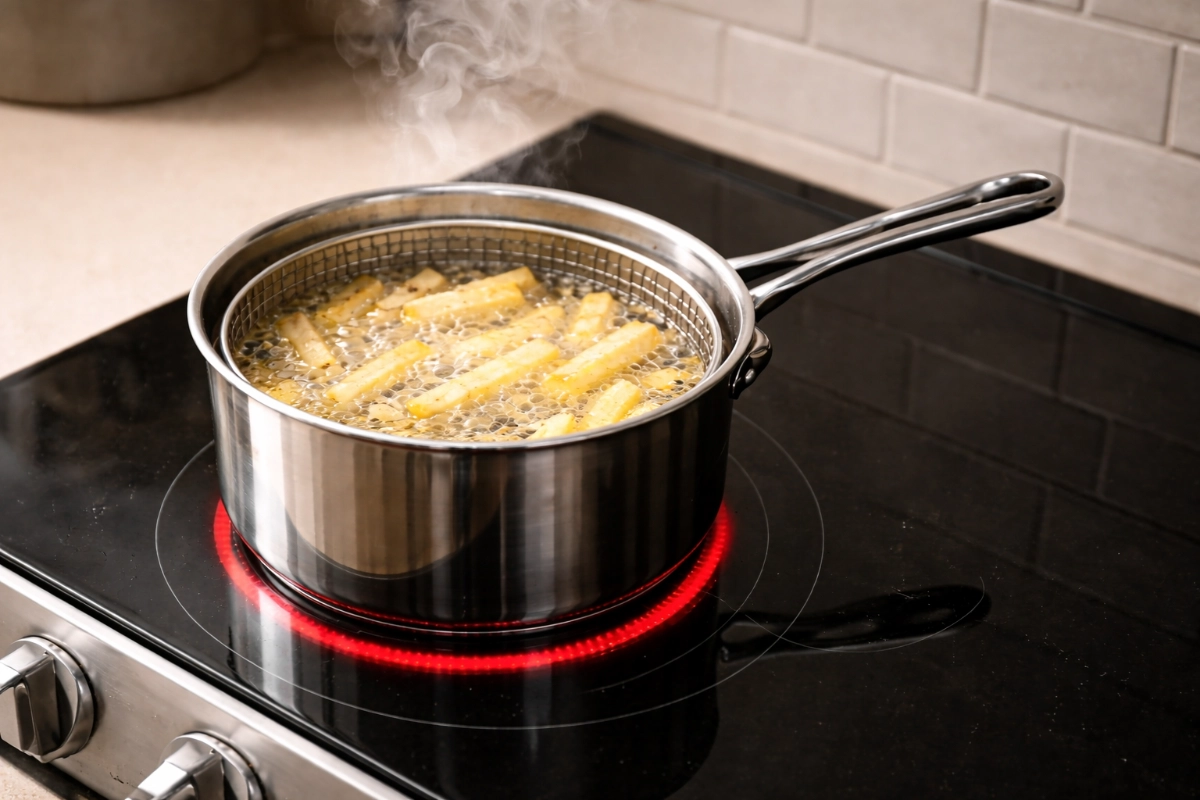
A peer-reviewed UK study analysing cooking fire injuries between 2011 and 2022 found that chip pans or deep-fat fryers were involved in around 35% of cooking-related fire injuries in the dataset[2].
Two key lessons emerge:
- Unattended moments – however brief – matter more with oil than with most other cooking methods
- Once oil ignites, fires escalate rapidly and are difficult to control safely UK fire services consistently advise people to never move a burning pan and never use water on an oil fire[3].
For more information on chip pan safety, visit our dedicated article here: how to prevent chip pan fires.
Hot oil explained: smoke point, flash point and ignition
Hot oil behaves in three predictable stages:
1. Smoke point
The oil begins to visibly smoke and break down.
2. Flash point
Vapours above the oil can ignite if exposed to a spark or flame.
3. Fire point
The oil can sustain combustion.
For most common cooking oils, smoke points are often around 230–240°C, while flash points are commonly in the 300°C range.
For more detailed information, take a look at our blog post on oil smoke points.
Why this matters in real kitchens
On high-power induction hobs:
-
The transition from smoke to dangerous conditions can happen more quickly than people expect
-
Smoke is often mistaken for “overdone oil” rather than a warning sign of fire These four common mistakes turn overheating into fires:
-
Leaving the pan unattended
-
Adding wet food or ice crystals to hot oil
-
Moving the pan while distracted
-
Attempting to extinguish oil fires with water Two critical rules for safe frying:
-
Never, ever add water to hot oil or an oil fire
-
Always dry food before frying
What a stove guard does (and why prevention matters)
Most people think about fire safety in terms of reaction: smoke alarms, extinguishers, or sprinklers. A stronger approach is preventing fires from starting in the first place.
A stove guard is designed for exactly that: it monitors conditions on the hob and automatically cuts power if it detects a genuine risk of ignition.

Airis stove guard is designed around this pre-ignition prevention approach.
In practice:
- A sensor above the hob monitors cooking conditions
- AI-driven algorithms analyse heat patterns and behaviour
- If risk patterns appear, an audible warning is issued
- If no action is taken, the system cuts power to the hob
- Cooking can resume once the user acknowledges and resets the system with a simple button press This stops oil from ever reaching ignition temperatures.
A typical cooking scenario might look like this:
- Induction hob set to high power
- Oil temperature rises rapidly
- The cook becomes distracted and leaves the pan unattended
- Temperature continues climbing Airis detects the unsafe trajectory and disconnects power before ignition occurs.
This proactive approach to fire safety, which focuses on prevention rather than suppression, reduces the risk of cooking fires and their associated effects:
- Fire damage
- Sprinkler water damage
- Smoke contamination
- Evacuations and disruption
- Injury risk Airis is designed to exceed the BS EN 50615 stove guard standard, providing fail-safe prevention without unnecessary interruptions to normal cooking or false alarms.
Seven practical habits for induction hob safety
You don’t need a long rulebook; these seven habits can deliver most of the benefits:
- Stay nearby when cooking with oil
- Avoid "boost" mode when heating oil
- Keep cloths, paper and plastics away from the hob
- Turn pan handles inward
- Clean grease from the hob regularly
- Clean cooker hood filters periodically
- Test smoke alarms regularly
These simple steps work because they reduce the two biggest drivers of kitchen incidents: unattended cooking and ignitable materials close to heat.
Safer alternatives to deep frying
If you enjoy fried foods but want to reduce risk, consider these safer swaps:
- Oven chips with a small amount of oil
- Air fryers, which use far less oil
- Thermostat-controlled electric fryers, which regulate oil temperature
If you (or a relative) won’t give up the chip pan, you can improve safety if you:
- Always stay present when cooking
- Keep a pan lid nearby
- Ensure children and pets stay out of the kitchen
- Avoid multitasking For higher-risk households - older adults, people with memory impairment, busy shared kitchens, or properties where staff can’t supervise every cook - pairing an induction hob with Airis adds automatic, pre-ignition protection that doesn’t rely on perfect human behaviour.
Summary: five rules to reduce induction hob fire risk
- Never use boost mode when heating oil
- Stay in the kitchen when frying
- Keep combustible materials away from the hob
- If oil begins to smoke, turn off the heat and allow it to cool
- Consider installing a stove guard for automatic shut-off
Have a question? We're happy to help.
Click "Contact us" to send us a message.

Rated 5 stars by our customers

FAQs on induction hobs
Are induction hobs safer than gas?
In many ways, yes. Induction hobs eliminate open flames and heat the pan directly. However, their rapid heating capability means oil can reach dangerous temperatures quickly if left unattended.
Why is cooking with oil considered high risk?
Oil must reach high temperatures for frying. If overheated, vapours can ignite and cause rapid fire spread. Cooking appliances remain the leading cause of accidental dwelling fires in England[1].
What should I do if oil starts to smoke?
Turn off the heat immediately and allow the pan to cool. Do not move the pan and never add water.
Can stove guards work with induction hobs?
Yes. Stove guard systems such as Airis are designed to monitor cooking conditions and disconnect power before ignition occurs when unsafe overheating is detected.
Are stove guards required in the UK?
They are not required, but BS EN 50615 defines the recognised performance standard for stove guards. Fire risk assessments in certain settings may recommend their use.
References
[1] Home Office Fire Statistics data tables, January 2026: https://www.gov.uk/government/collections/fire-statistics
[2] An analysis of cooking fire injuries 2011 to 2022 in Merseyside UK, Fire Safety Journal Volume 143, February 2024: https://www.sciencedirect.com/science/article/pii/S0379711223003417
[3] Pan fires - fire safety at home: London Fire Brigade https://www.london-fire.gov.uk/safety/the-home/cooking/pan-fires/