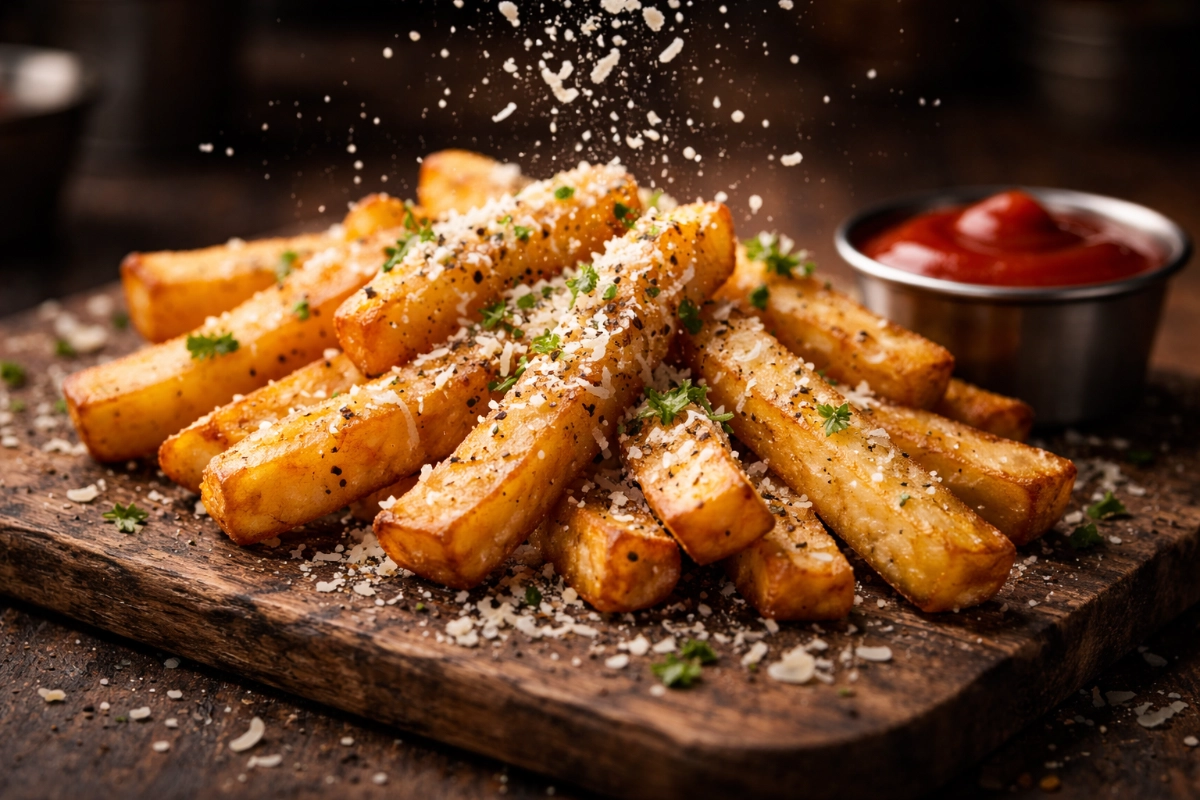
How to prevent chip pan fires
Please note that the fire safety advice in this post is for informative purposes only. Unicook cannot be liable for your safety in the kitchen.
Chips are one of the UK’s favourite sides or quick bites: you can eat them with ketchup, mayo, BBQ, piri-piri, cheesy-chips, even curry sauce, the choice is endless. And they’re once, twice, even thrice-cooked: the crispier the better! However they come – nothing beats a good chip. We love them. But how do you cook them at home?
We all know they’re best with that super-crispy coating, and so you use a chip pan with a good dousing of nice hot oil. But that’s the hidden danger in the home, isn’t it? It’s all going fine until it’s not.
It’s easy to leave the pan unattended for a moment; only a few seconds while you sort the kids and the dog out, or answer the door, or pop to the toilet before guests arrive. Or, perhaps a loved one is vulnerable and can be forgetful in the kitchen, even for a moment. That’s all it takes for a chip pan to catch fire and you’re in a state of panic. In fact, it’s so quick that it could have already happened by the time you have finished reading this article.
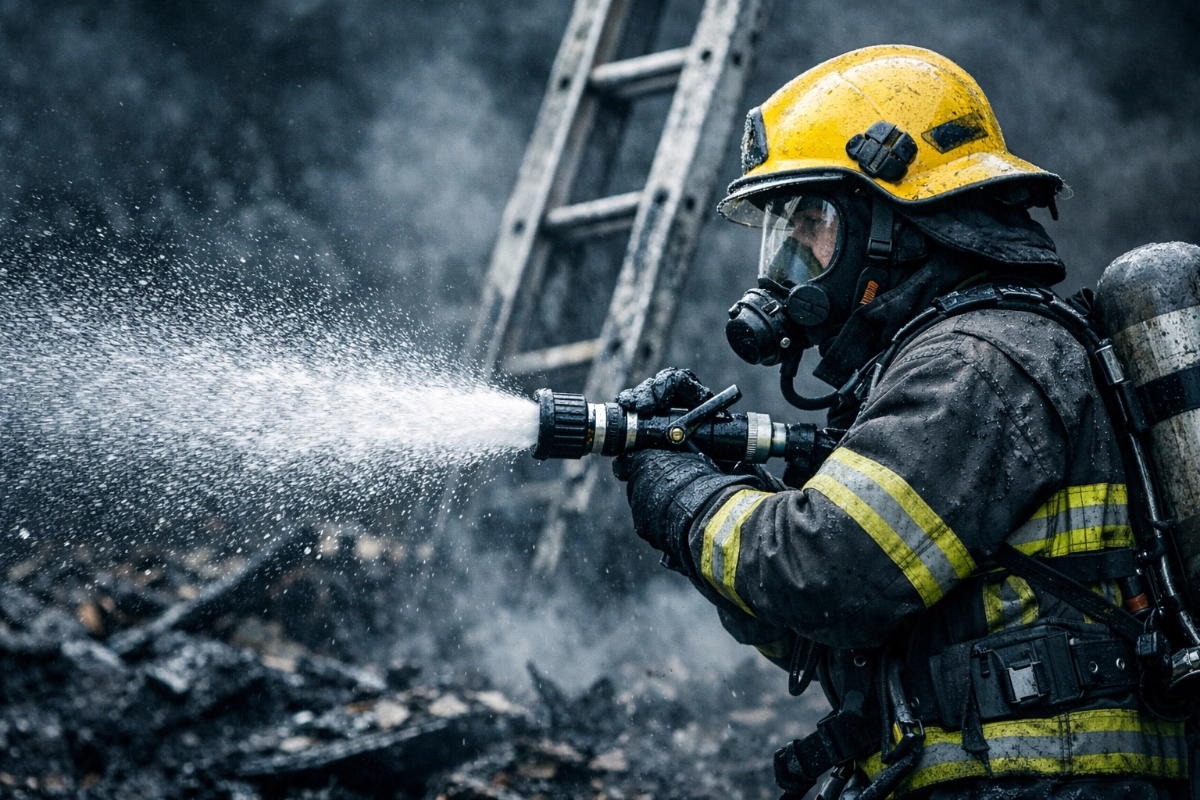
Are chip pans dangerous?
UK government statistics show that chip pan usage and, accordingly, chip pan-related fires have declined in recent years: in 1994, chip pans accounted for 20% of accidental fires in the home, but only 6% in 2016/17[1]. This decline is due to a combination of factors: changing cooking habits, rising popularity of oven chips, and preventative work by fire and rescue services (some of whom offered incentives for residents to swap their chip pans for deep fat fryers)
However, the drop in usage doesn’t make them any less dangerous: in 2024/2025, there were 1,119 chip pan fires in England alone, and Wales showed a 5% increase in fires caused by chip pans[3].
Heating large amounts of oil in a pan that has no temperature controls requires constant supervision, and overheated oil can quickly reach ignition temperature (this is a particular risk on powerful, modern induction hobs).
What makes chip pans so risky?
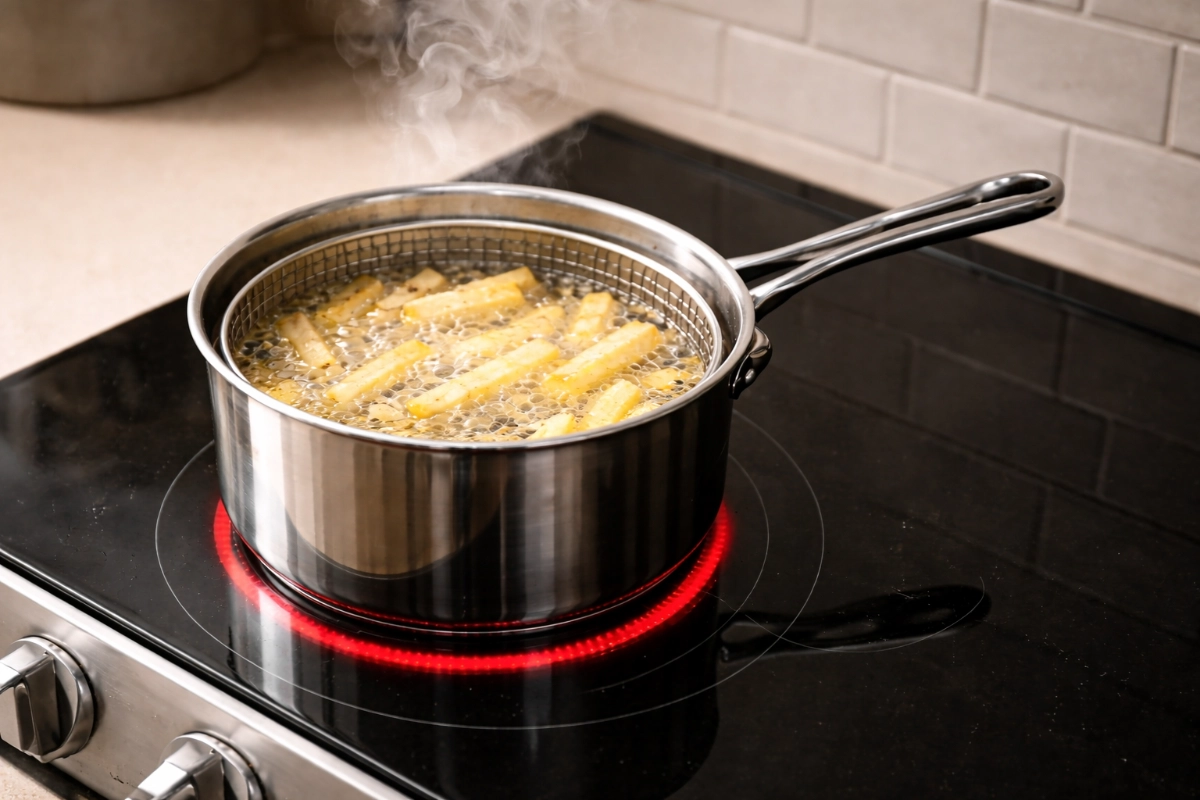
Chip pans are deep-sided and usually come with a lid and a basket to help remove and drain the chips. They are filled with oil and heated to around 160°C-190°C: at these temperatures, water vaporises instantly, expanding to 1500 times its volume – not so good if you’ve just washed your potatoes. That’s why we always make sure food is dry before frying and never attempt to extinguish the fire with water.
Here’s a video from the London Fire Brigade that shows exactly what happens when water is poured on a pan fire:
Most vegetable oils have a smoke point of about 230 °C and a flash point of 315 °C. So, it’s easy to see why an unattended pan might become a serious problem in no time at all.
Hot oil can cause serious burns – it’s volatile, and can overheat when cooking and burst into flames. In fact, the risk is so high that fire services now encourage people to use oven chips, modern deep-fat fryers, or air fryers.
If you, or an older friend or relative is set on using a chip pan, then it is possible to use it safely: you just need to be sensible and consider how fires can be avoided. Luckily, there are some products on the market that can help us already, such as Airis stove guard by Unicook.
Airis can virtually eliminate the risk of chip pan fires. It uses smart technology to detect when the oil and pan’s contents are heating up too fast. This allows it to switch the hob off completely before anything goes awry. Airis achieves this well below the danger zone where cooking oil smokes and catches fire.
Video: how does Airis prevent chip pan fires?
Stove guard devices like Airis can take away worries completely. After all, people are only human and accidents can happen to anyone, especially to inexperienced cooks or vulnerable people. Not only is Airis effective at preventing stove top fires, but it does so without the need for human input – this allows people to remain independent for longer.
How to prevent chip pan fires
In addition to a product like Airis, there are some easy steps you can take to avoid chip pan fires and make those luscious, crispy fries a safe and delicious treat:
✅ Keep the oil level in the pan below one third full. ✅ Smoking oil is too hot. Turn the heat off and leave it to cool, it’s not worth the risk. ✅ Treat that pan like your favourite TV programme or film and keep your eyes glued to it. Unattended pans can soon get out of control, especially with induction hobs. ✅ “NEVER! Deep fry when you’ve been drinking alcohol or taking drugs or if you are feeling tired.” – Cheshire Fire and Rescue Service. ✅ Pick up a thermometer and keep an eye on the temperature. ✅ Test the temperature of the oil before using it with a small piece of whatever you’re frying. If it crisps quickly, it’s hot enough. Adjust the heat so it doesn’t reach the danger zone. ✅ Remember we said earlier that water can vaporise instantly and expand 1500 times its volume? Avoid an explosion or hot oil spitting by ensuring all food is dry before frying. ✅ Never throw water on the fire for the same reason: if you do have a fire and it’s safe to do so – turn off the heat then leave the room. Shut the door and call 999. A purposely-designed fire blanket can be used, but you should never use a damp tea towel. ✅ “It’s a common mistake to make, so we want to make sure everyone knows that if you have a fire involving any sort of fat or oil, DO NOT let any water come into contact with the oil, never use a damp tea towel and do not attempt to tackle the fire if it is not safe to do so. Even one drop of water could cause a huge fireball and cause serious injury.” – Gary Bannister, Watch Manager, Essex Fire and Rescue Service. ✅ Finally, get a smoke detector and test it often. The bottom line is this: if using a chip pan, be extremely careful, and never, ever, leave it unattended.
Thanks for reading, and enjoy those chips!
If you have questions, we’re here to help
We can call you back, or you can contact us by phone on 0208 798 3462 or click on ‘Contact Us’ to send us a message.

Rated 5 stars by our customers

Chip Pan FAQs
Why are chip pan fires so dangerous?
Chip pan fires involve heating large quantities of oil, which burns at extremely high temperatures and can spread rapidly. Throwing water onto burning oil causes it to instantly vaporise and expand, creating a fireball that can result in severe burns and property damage. Oil fires can also quickly spread to cabinets, extractor fans and ceilings.
What should I do if a chip pan catches fire?
If it is safe to do so:1. Turn off the heat source.2. Do not move the pan.3. Do not use water.4. Leave the room, close the door and call 999.A purpose-designed fire blanket may be used only if the fire is small and you are confident it is safe. Never use a damp tea towel.
Is it safer to use a deep-fat fryer instead of a chip pan?
Yes, in most cases. Modern deep-fat fryers include thermostatic controls that prevent oil from overheating. Traditional chip pans rely entirely on manual heat control and supervision, which increases risk if the pan is forgotten or the temperature is misjudged.
At what temperature does cooking oil catch fire?
Most vegetable oils begin to smoke at around 200–230 °C. If heating continues, the oil can reach its flash point (often above 300 °C) quickly, where it can ignite. Because hob temperatures can rise quickly — particularly on induction hobs — oil can move from safe to dangerous temperatures in a short period of time.
Can stove guard devices really prevent chip pan fires?
Stove guard devices such as Airis are designed to detect abnormal temperature rise and cut power to the hob before oil reaches ignition temperature. They do not replace safe cooking practices, but they add an additional layer of protection — particularly in households with elderly, vulnerable, or distracted occupants.