
House fires: proactive vs. reactive safety — which is best?
When it comes to house fires, most UK homes rely on traditional systems that react once a fire has already started. Smoke alarms, sprinklers, and extinguishers are essential — but they are all reactive measures.
Proactive fire safety, on the other hand, takes a different approach: Instead of alerting you after the fire has already started, it detects dangerous conditions early, sounds a warning, and intervenes to prevent ignition.
Understanding the difference between the two types of fire safety devices is important, especially given that cooking appliances remain the leading cause of accidental domestic fires in the UK[1].
In this post, we’ll explore the key differences between reactive and proactive fire safety, why proactive safety is the superior approach, and how smart technology is making homes safer than ever before.
Proactive vs. reactive fire safety at a glance
• Reactive fire safety systems (such as smoke alarms and sprinklers) respond after a fire has started. • Proactive fire safety systems intervene before ignition by detecting dangerous conditions early. Both are important, but prevention significantly reduces risk to life, property damage, disruption and insurance impact. In domestic kitchens — where most accidental fires begin — proactive protection provides an additional layer of safety.
What is reactive fire safety?
Reactive fire safety measures respond after a fire has already ignited. These systems work to minimise damage and alert occupants, but do nothing to prevent the fire in the first place.
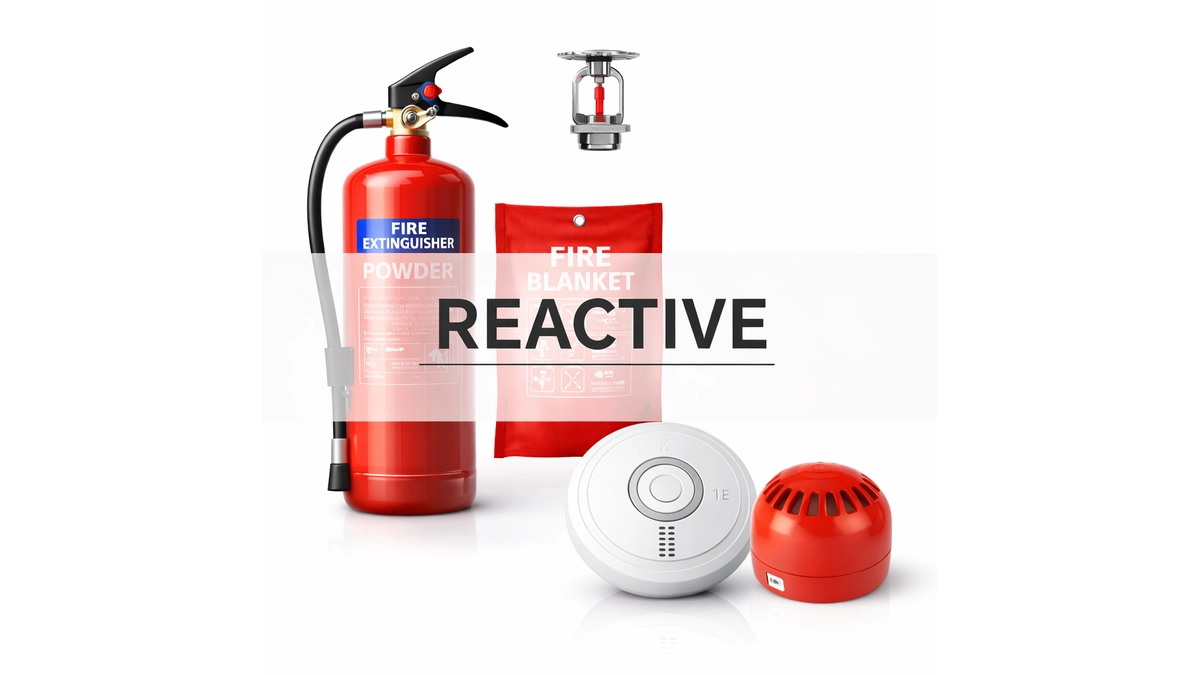
Common reactive fire safety systems include:
- Smoke alarms – Detect smoke particles once a fire has begun
- Heat detectors – Trigger an alarm when temperature rises rapidly
- Sprinkler systems – Suppress the fire by discharging water
- Fire extinguishers and blankets – Require manual operation to put out a fire
- Foam suppression systems – Used in commercial buildings to suppress large fires These are all valuable tools, but they have one major flaw in common: they only work after a fire has already started. At that point, oil may be burning, flames may be spreading, and residents could already be exposed to heat and toxic smoke.
What is proactive fire safety?
Proactive safety focuses on preventing ignition. Instead of waiting for flames or smoke, proactive fire safety systems detect dangerous conditions and intervene early. In domestic kitchens, this usually means monitoring cooking on electric hobs and cutting power before overheated pans can reach ignition temperature.
How does proactive fire safety work?
Here’s how a proactive fire safety system – such as a stove guard – works to prevent cooking fires from starting:
✅ Monitors cooking temperature and patterns – Instead of reacting to flames, proactive safety monitors temperature, cooking habits, and unattended stoves to detect potential hazards ✅ Detects unsafe conditions – Sensors work with sophisticated algorithms to determine if temperatures are rising to dangerous levels without human presence at the stove ✅ Intervenes before ignition – If unsafe conditions are detected, the system will alert the user and automatically cut power if necessary to prevent ignition ✅ Reduces human error risks – Many fires are caused by forgetfulness or distractions. Proactive systems ensure that mistakes don’t become disasters This approach addresses the root causes of domestic fires: unattended or overheated cooking.
An example of a proactive device is a stove guard, such Airis, which works to stop fires before they begin.
Proactive vs. reactive: the key differences
Let’s compare these two approaches side by side:
|Feature |Reactive Safety|Proactive Safety | |----------------------------------| | | |Prevents fire before ignition? |✖ No |✅ Yes | |Works without human action? |✖ No |✅ Yes | |Reduces false alarms? |✖ No |✅ Yes | |Minimizes risk to life and property? |✅ Yes (after the fire starts) |✅ Yes (before the fire starts) | |Meets modern fire safety standards? |✅ Yes |✅ Yes |
Clearly, while reactive safety is necessary as a last line of defense, proactive safety is the smarter choice for real fire prevention.
Why prevention matters in domestic kitchens

The kitchen is consistently identified as the highest-risk room in the house for fire[1]. But what makes it so dangerous?
Factors that can contribute to increased kitchen fire risk include:
- Distraction (phones, conversations, doorbell)
- Fatigue
- Alcohol or drugs
- Cognitive decline
- Medication that causes drowsiness
- Student/shared living environments Even the most experienced and responsible cooks can forget a pan temporarily; preventative technology is designed for these ordinary human moments.
How Airis brings proactive fire safety to your home
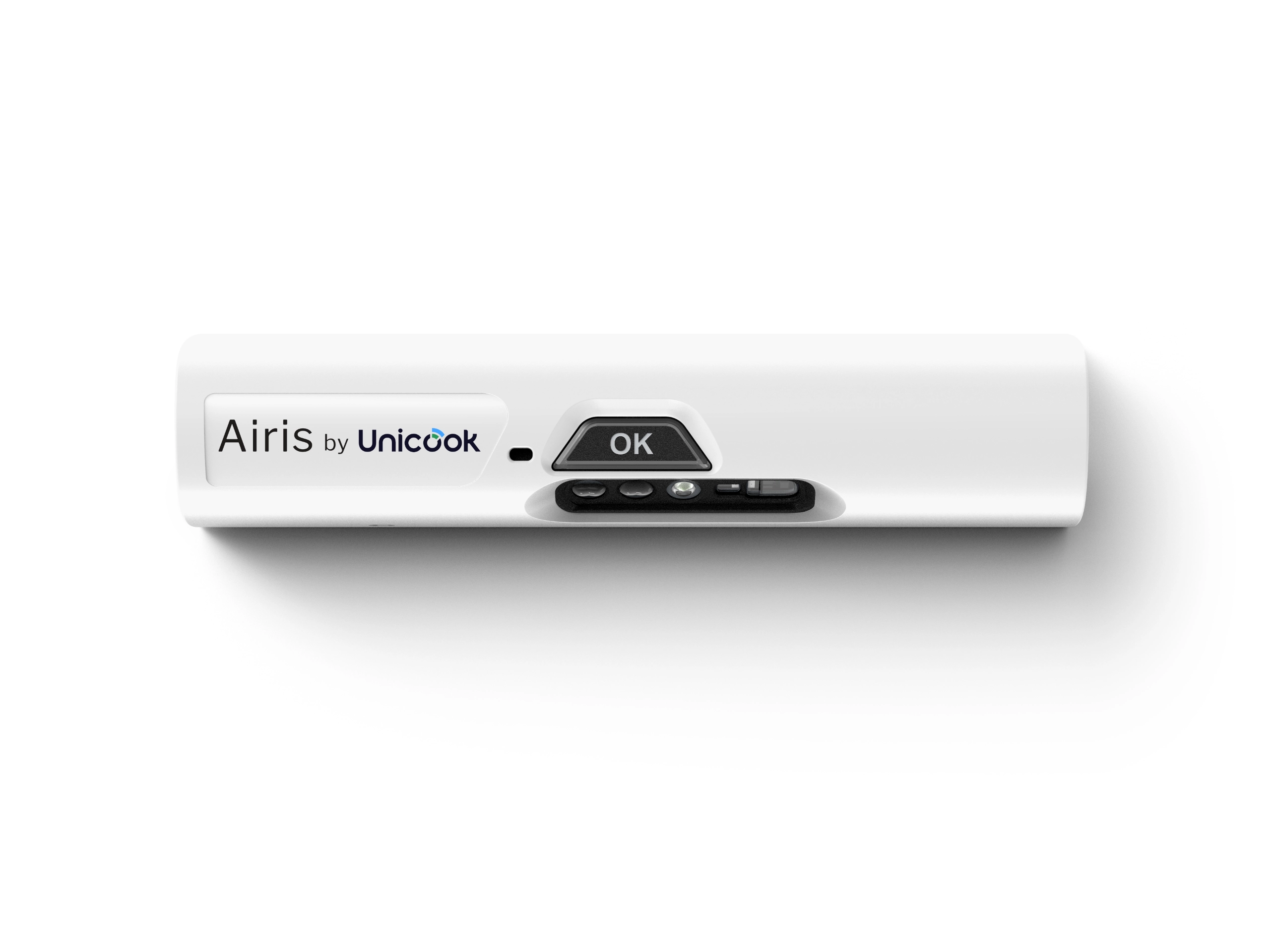
Airis is one of the most advanced proactive fire safety solutions available today. Here’s how it works:
1. Cooking pattern recognition
Airis recognises when someone is actively cooking and continuously monitors heat levels and human presence in real time.
2. Continuous temperature monitoring
Multiple sensors tracks the temperature of the pan and hob, recognising if heat is reaching dangerous levels.
3. Early warning
If unsafe conditions develop, Airis issues an audible alert, prompting the cook to adjust the heat or turn off the hob.
4. Automatic power cut-off
If the user does not respond to the alert, Airis shuts off power to the hob, stopping a fire before it starts.
5. Optional remote alerts
With Airis Sense Wi-Fi, caregivers or loved ones can receive alerts and monitor safety remotely.
Unlike smoke alarms and sprinklers, Airis intervenes before smoke appears, making it one of the most effective fire prevention tools available.
Real-life scenarios: David vs. Angie
To illustrate the difference between reactive and proactive safety, let’s consider two scenarios:
David’s home (reactive safety only)
David lives alone and enjoys cooking. One evening, he gets distracted while frying food. The oil overheats and catches fire. His smoke alarm sounds, but by the time he reacts, flames are spreading. He grabs a fire extinguisher but panics and struggles to put out the fire. By the time emergency services arrive, his kitchen is severely damaged.
Angie’s home (proactive safety installed)
Angie also lives alone and loves cooking. She has Airis installed. One evening, she gets distracted while frying food. Before the oil reaches its smoke point, Airis alerts her. Since she doesn’t respond, Airis automatically cuts the power, preventing ignition. She returns to find her food slightly overcooked but her kitchen—and home—completely safe.
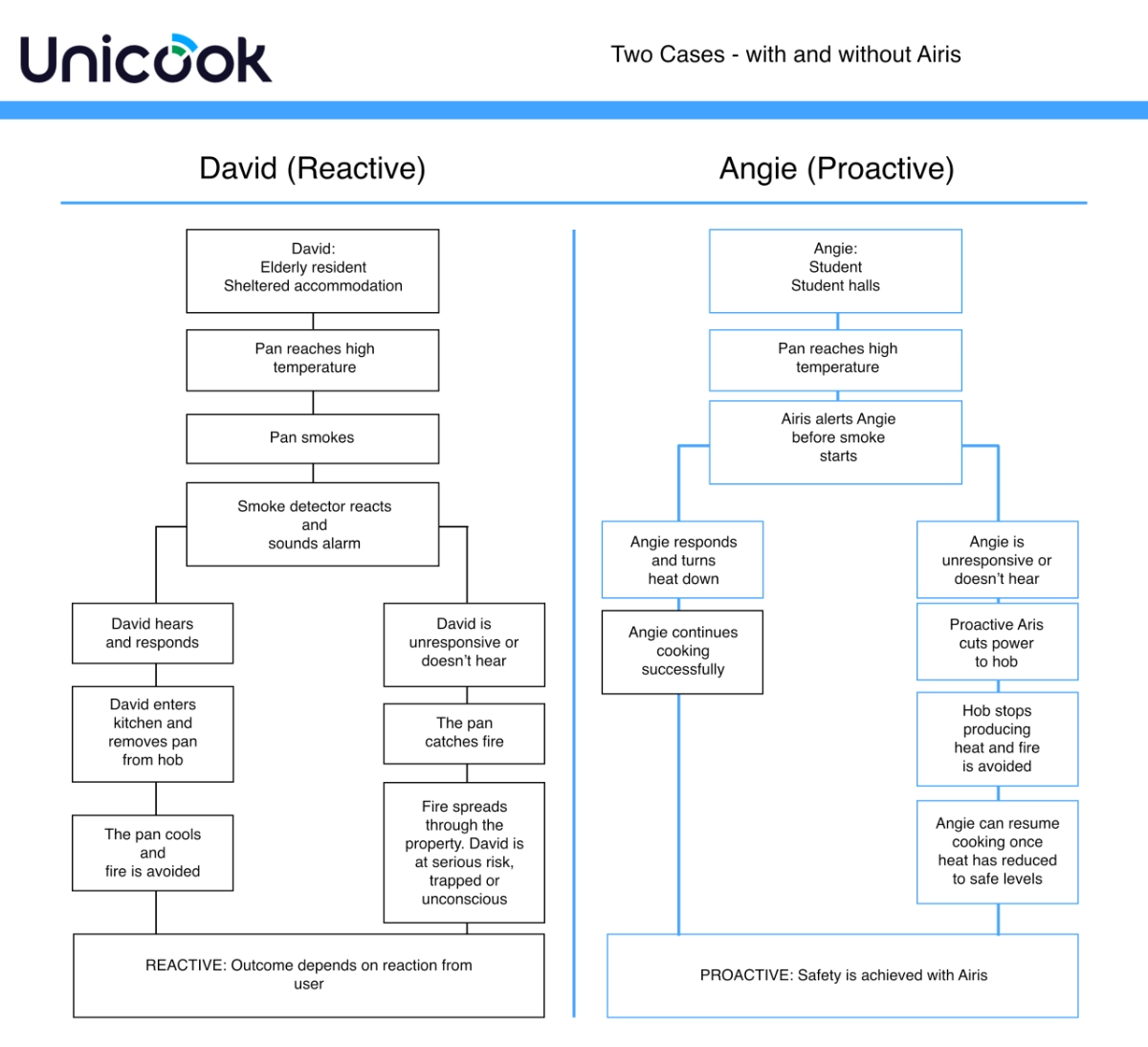
Who would you rather be—David, relying on his reaction time and luck, or Angie, protected by proactive safety?
The financial impact: fire damage vs prevention
Some people assume proactive fire safety is expensive, but in reality, installing Airis is far cheaper than dealing with the aftermath of a fire.
Even a small kitchen fire can result in:
- Property damage – Replacement of cabinets and appliances, as well as structural repairs and cleaning bills.
- Lost belongings – Family heirlooms, important documents, and personal items can be destroyed.
- Temporary relocation – Some fires make homes uninhabitable, leading to costly hotel stays or rentals.
- Insurance excess payments and increased premiums – A single fire claim can cause long-term increases in home insurance costs. Compared to these expenses, a one-time investment in Airis is a small price to pay for lifelong safety.
Is proactive fire safety a replacement for smoke alarms?
No. Smoke alarms remain essential, and are a legal requirement[2]. However, they aren’t able to offer any sort of prevention against fires.
The best fire safety strategy is layered protection:
- Prevention (stop ignition)
- Detection (alert if ignition does occur)
- Suppression (control the fire if possible) Proactive kitchen fire prevention provides the essential first layer, drastically reducing the chances of a cooking fire starting in the fire place.
Final thoughts: why proactive fire safety is the future
We rely on proactive safety in so many aspects of life—automatic braking in cars, early warning medical systems, and smart home security. Why should fire safety be any different?
Reactive safety has its place, but it doesn’t stop fires from happening. Proactive solutions like Airis prevent fires entirely, reducing risks and giving homeowners real peace of mind.
If you want to truly protect your home and loved ones, proactive fire safety isn’t just an option—it’s a necessity. This is especially true for elderly residents, assisted living tenants, and students, where prevention can provide additional protection along with peace of mind.
If you have questions, we’re here to help
We can call you back, or you can contact us by phone on 0208 798 3462 or click on ‘Contact Us’ to send us a message.

Rated 5 stars by our customers

FAQs: reactive vs proactive fire safety
Do I still need smoke alarms if I install a stove guard?
Yes. Smoke alarms are legally required and remain essential. Stove guards provide additional prevention but do not replace detection, especially in areas of the home away from the kitchen.
Is proactive fire safety only for vulnerable people?
No. Anyone can become distracted while cooking. However, higher-risk households may benefit most from preventative systems.
Can proactive systems stop all fires?
No system can eliminate all fire risk. Stove guards specifically reduce the risk of ignition from electric hob overheating.
Are proactive systems compliant with UK standards?
Products tested to BS EN 50615 meet defined European performance criteria. In some residential contexts, they are referenced within BS 9991:2024.
Are stove guards suitable for gas hobs?
Currently, Airis is designed only for electric hobs (up to 90 cm wide), including ceramic, halogen, induction, and older “iron ring”-style hobs.