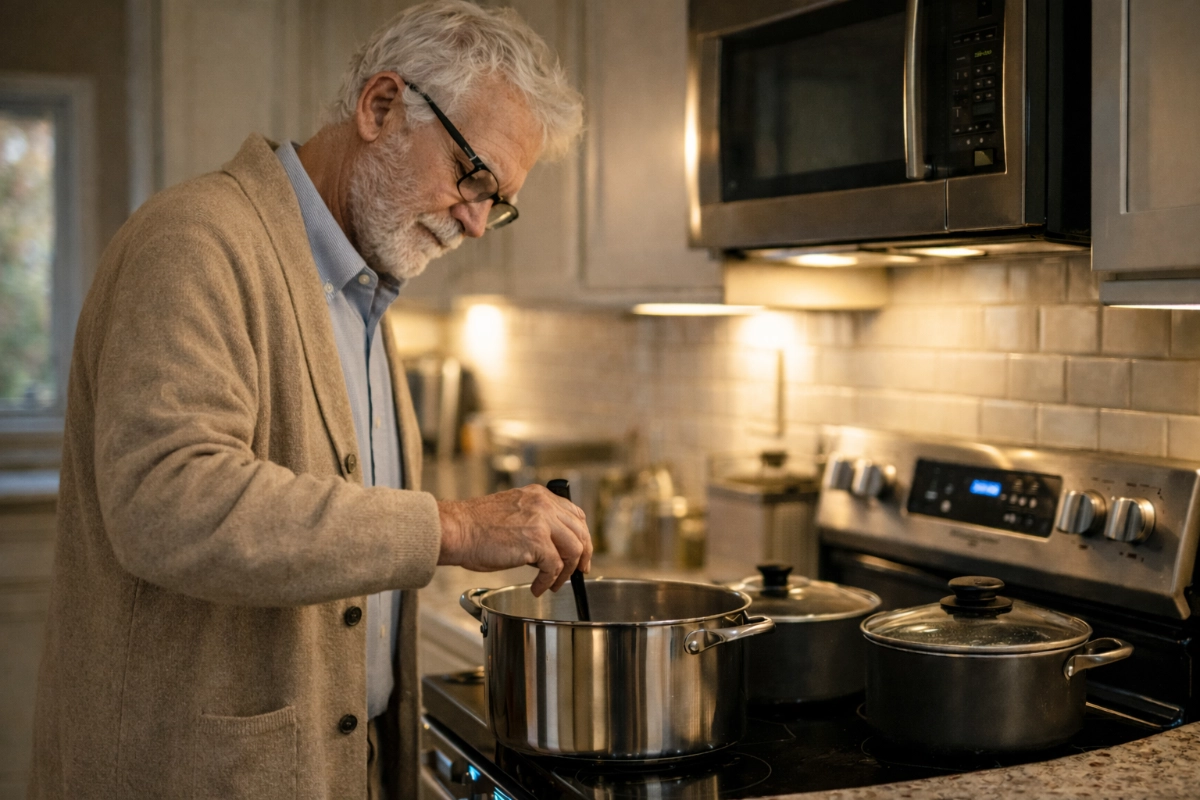
Elderly kitchen adaptations: how to create a safer kitchen for older adults
- domestic fire safety
- kitchen fire safety for the elderly
Elderly kitchen adaptations: how to create a safer kitchen for older adults
People naturally want to remain living independently for as long as possible, preferring to “age in place” in their own homes rather than moving into residential care.
This is understandable, not least because statistics show that life expectancy for care home residents is drastically shorter compared to non-care home residents in the same age bracket.
How much shorter? In some cases, the difference in life expectancy is as much as 16 years[1].
Small adaptations — particularly in higher-risk areas such as kitchens — can play an important role in making continued independent living possible.
According to UK fire statistics, cooking appliances are involved in around 45% of accidental house fires, with unattended cooking being the most common cause[2].
For older adults experiencing memory difficulties or reduced mobility, this risk can increase significantly – some fire services report that the majority of injuries and hospitalisations due to cooking fires are in those over the age of 65[3].
Certain medical conditions that may increase these risks include:
- Mild Cognitive Impairment (MCI)
- Dementia or Alzheimer’s disease
- Parkinson’s disease
- Epilepsy
- Visual impairment
The good news is that practical kitchen adaptations can dramatically improve safety without requiring a full kitchen renovation. In many cases, relatively small changes can help older adults to continue cooking safely for years.
This guide explains the most effective elderly kitchen adaptations to help families and carers create safer kitchens that also support independence.
At a glance: What kitchen adaptations help elderly people cook safely?
The most effective elderly kitchen adaptations include improved lighting, high-contrast appliance controls, uncluttered worktops, easy-grip taps and handles, pull-out storage, lightweight cookware, and automatic cooker cut-off systems (known as “stove guards”) that can prevent fires before ignition occurs.
Why kitchens become more dangerous for elderly people
Cooking is a complex task that requires coordination, memory, and sensory awareness. When any of these abilities decline due to aging or illness, the risk of accidents increases.
Many elderly people also suffer from poor sleep, which can exacerbate the impact of existing health conditions.
Cognitive decline and memory loss
Conditions such as dementia or Mild Cognitive Impairment (MCI) can affect a person’s risk of leaving cooking unattended.
Dementia was the leading cause of death in the UK in 2024, accounting for over 76,000 deaths. According to the Alzheimer’s Society, more than 900,000 people in the UK are living with dementia, with that figure set to rise to 1.4 million by 2040[4].
Common risks related to cognitive decline and memory loss include:
- Forgetting food that is cooking on the hob
- Leaving appliances switched on
- Difficulty following cooking instructions
- Becoming distracted and not returning to the kitchen
Motor symptoms and reduced coordination
Some neurological conditions can also affect physical movement and coordination.
Parkinson’s disease, for example, may cause:
- Tremors
- Slower movement
- Reduced coordination
- Difficulty gripping objects
These symptoms can make handling hot pans, pouring boiling liquids, or adjusting appliance controls more difficult.
Parkinson’s UK estimates that around 153,000 people in the UK live with Parkinson’s, with numbers expected to rise as the population ages[5].
Sensory changes
Ageing can affect the senses as well.
Reduced eyesight may make it harder to:
- See hob settings
- Read appliance displays
- Notice spills or hazards
Hearing impairment can reduce people’s ability to hear:
- Kitchen timers
- Auditory cues that food is overcooking, such as a pan sizzling
- High-frequency smoke alarms (elderly people find it harder to hear the frequency of the sounds)
A reduced sense of smell can also make it harder to detect burning food or smoke.
Seizure risk during cooking
For people living with epilepsy, cooking can present additional risks.
If a seizure occurs while cooking, the person may be unable to react to hazards such as:
- Boiling liquids
- Hot pans
- Overheating food
Appropriate kitchen adaptations can help to reduce these risks brought about by changes to cognitive, physical, and sensory capabilities.
What are the most common kitchen accidents for elderly people?
Families can prioritise safety improvements for older relatives by understanding the most common causes of kitchen accidents for the elderly.
1. Unattended cooking fires
UK fire statistics consistently show that cooking appliances are involved in a large proportion of accidental house fires, with unattended cooking being one of the most common causes[6].
These incidents often occur when someone forgets food on the hob, becomes distracted, or leaves the kitchen while cooking.
2. Burns and scalds
Burns and scalds are also common among older adults, with slower reaction times increasing the likelihood of accidents and injuries.
Typical causes include hot saucepan handles, boiling kettles, and steam from cooking pots.
3. Falls in the kitchen
Falls may occur due to age-related frailty, but the risk is magnified in kitchens with cluttered floors, slippery surfaces, poor lighting, or items stored at the wrong height for the person cooking.
4. Incorrect appliance use
Cognitive or sensory impairments can also lead to the misuse of appliances, such as leaving hobs switched on, choosing the wrong heat setting, and difficulty understanding digital controls.
Many of these risks can be reduced through thoughtful kitchen design, but what considerations should be made to allow older adults to cook safely and independently?
What makes a kitchen safe for elderly people?
Elderly-friendly kitchen design should focus on three elements: visibility, simplicity, and accessibility.
Clear layout and uncluttered surfaces
Worktops and floors should remain as clear as possible.
This helps reduce:
- trip hazards
- accidental spills
- confusion or disorientation when preparing food
Keeping everyday kitchen items within easy reach also reduces the need to stretch or climb, which frequently results in falls.
Consider whether the kitchen cupboards are laid out to make life easiest and safest for the cook, or if the storage arrangements are exactly the same as when your elderly relative moved in several decades ago.
Visible labelling and written reminders
Adding clear, concise labels and brief instructions around the kitchen can aid those with MCI or other neurodegenerative conditions to navigate and cook more easily.
These might include:
- labels on cupboards as a reminder of their contents
- laminated operating instructions mounted next to appliances
- reminders on the fridge to use foods by a certain date
Good lighting
Poor kitchen lighting can increase the risk of accidents, reduce the quality of food preparation and post-meal cleanup, and make cooking a less enjoyable experience[7].
Improvements can often be made to both the general lighting (usually provided by ceiling-mounted lights) and task lighting, which focuses on specific areas of the kitchen.
Useful task lighting improvements include:
- under-cabinet lights
- lights inside drawers and cupboards
- bright worktop lighting
- cooker hoods with powerful built-in lighting
- eliminating shadows over cooking and washing up areas
High-contrast appliance controls
High-contrast markings can make appliance controls easier to see.
For example:
- bold markings on hob controls
- clearly labelled dials with large text
- selecting hobs with visible heat indicators
Easy-to-use taps and handles
Kitchen fixtures should be simple to operate.
Examples include:
- lever taps instead of twist taps
- push-open and soft closing drawers
- easy-grip cupboard handles
These small changes can make everyday kitchen tasks much easier, particularly for those who have limited dexterity.
Adaptive kitchenware and cookware
Adaptive kitchen and dining aids can make everyday cooking tasks easier, along with improving comfort and control when eating and drinking.
A sample of adaptive kitchen and dining aids includes:
- Ergonomic/lightweight cutlery
- Dual-handled and anti-spill mugs
- lightweight/mini kettles or kettle tippers
- anti-slip flooring or mats
- lightweight cookware
Technology can also work alongside these small kitchen adaptations and cut the risk of one of the biggest causes of injury: unattended cooking fires.
What kitchen safety devices help elderly people?
Hob timers are often marketed as an effective way to improve cooking safety among elderly or vulnerable people, but they have several limitations.
Why simple timers are not enough
The disadvantages of kitchen timers as a fire safety measure include:
- the user must remember to set the timer
- the alarm may not be heard if the user leaves the kitchen
- the alarm provides a reminder, rather than preventing danger
- someone with cognitive decline may forget what the alarm relates to
Since hob timers work based on time, rather than temperature, they should not be relied upon as a primary kitchen fire-prevention measure; a fire can occur in under two minutes on some powerful, modern hobs. You can read about the downsides of hob timers here.
Stove guards: preventing fires before they start
Stove guards are designed specifically to prevent cooking fires from ever starting.
These systems use sensors to monitor cooking conditions on the hob and automatically cut power if dangerous overheating or unattended cooking is detected.
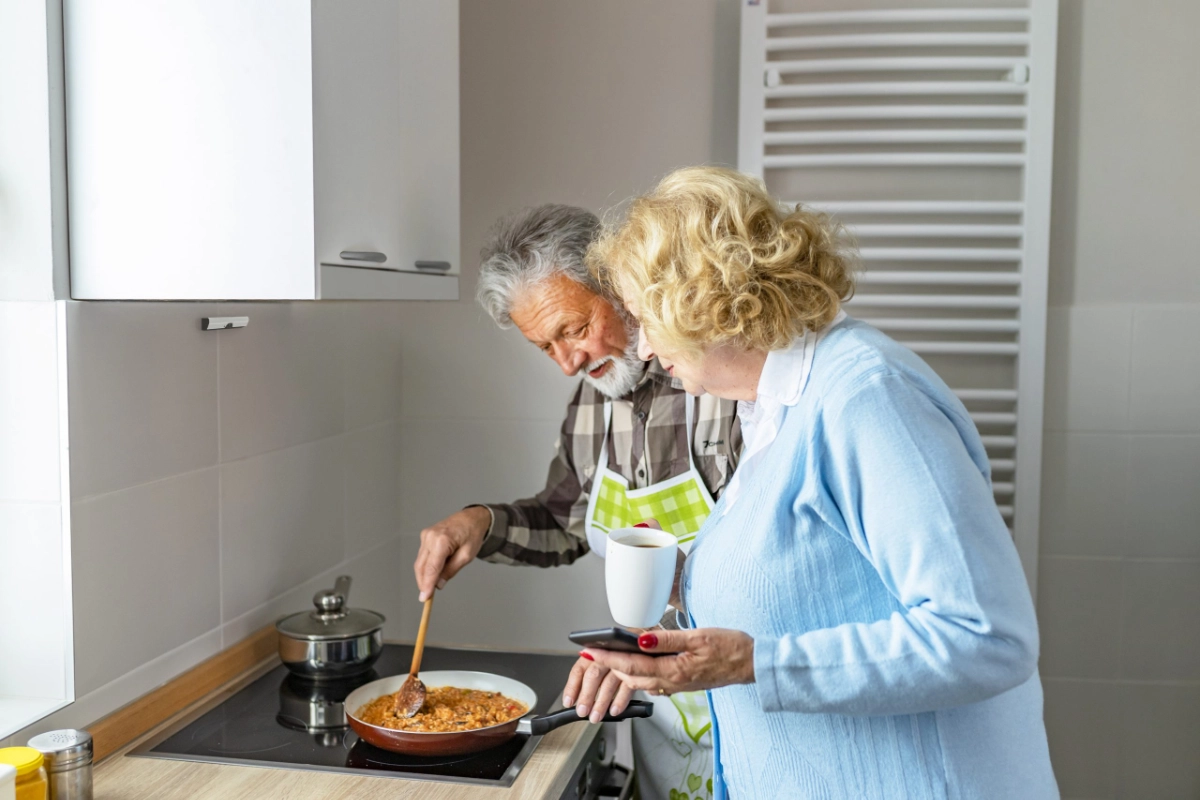
Stove guards are carefully designed, engineered, and tested to ensure that users can continue to cook as they always have done without interference from false alarms. This type of preventative technology allows older adults to continue cooking independently while reducing the risk of serious kitchen fires.
Airis Sense Wi-Fi adds additional reassurance by combining multi-sensor monitoring with remote alerts via SMS and email.
Family members can receive notifications if:
- Airis has intervened to stop the hob overheating
- Cooking occurs outside expected hours
- Cooking behaviour appears unusual
- No cooking activity occurs within a defined period
Remote alerts for added peace of mind.

Email and SMS alerts from Airis Sense Wi-Fi mean the safety of loved ones need never be in doubt.
Cooking behaviour attention
Mrs Jackson
Cooking at night time.
Wed, 8/10, 2:34am
Safera Care Cloud
Cooking behaviour attention
Margaret B
No cooking has been detected in 3 days.
Safera Care Cloud
Safera Care Cloud notification
Flat 29, Block B
Batteries of the device are getting low.
Safera Care Cloud
Safera stove shutdown alarm notification
Mr Porter
Stove overheated.
Wed, 23/04, 1:34pm
Safera Care Cloud
Hob timers vs stove guards for elderly kitchen safety
This table summarises the differences between kitchen timers and stove guards for fire safety:
| Feature | Kitchen timers | Stove guards |
|---|---|---|
| Requires user to activate | ✅ Yes | ✖ No |
| Provides reminder only | ✅ Yes | ✖ No |
| Prevents dangerous overheating | ✖ No | ✅ Yes |
| Automatically switches off hob | ✖ No | ✅ Yes |
| Works if the user forgets to act | ✖ No | ✅ Yes |
| Suitable for cognitive impairment | Limited | ✅ Yes |
Key takeaway: timers can assist with routine cooking, but they do not prevent fires. Stove guards provide automatic cooker cut-off if a dangerous cooking situation develops.
Kitchen safety adaptations for specific conditions
Different conditions may require slightly different safety measures.
Dementia and Alzheimer’s
Helpful adaptations include:
- Simplified appliance controls
- Clear labelling of appliances
- Reduced worktop, floor, and cabinet clutter
- Stove guard installation to reduce the risk of unattended cooking fires
Mild Cognitive Impairment (MCI)
Early cognitive decline may benefit from:
- Clear appliance interfaces
- Routine-based monitoring
- Preventative safety systems
Parkinson’s disease
Kitchen adaptations for people living with Parkinson’s should focus on stability and ease of use.
Examples include:
- Cookware with stable bases
- Easy-grip cupboard and drawer handles
- Simple appliance controls
Epilepsy
For people living with epilepsy, useful safety measures include:
- Avoiding open flames where possible
- Automatic hob shut-off systems
- Keeping work surfaces clear
Visual impairment
Visual impairments can be mitigated with:
- High-contrast appliance controls
- Improved lighting
- Audible appliance feedback
- A stove guard with an audible reminder
- A stove guard with a safety lock to ensure the hob can’t be switched on accidentally
Checklist: 10 quick kitchen safety improvements for elderly relatives
If you are helping an older family member improve kitchen safety, the following steps can make an immediate difference:
- Improve lighting above worktops
- Remove clutter from cooking areas
- Install anti-slip flooring or mats
- Clearly label appliance controls
- Use lightweight cookware
- Replace twist taps with lever taps
- Install pull-out cabinet shelves
- Improve visibility with high-contrast markings
- Simplify appliance controls where possible
- Install automatic stove protection
Even a few of these changes can significantly improve kitchen safety.
When should families consider installing a stove guard?
Families often consider installing a stove guard when:
- An older adult frequently forgets food on the hob
- Someone lives alone with early dementia
- Cooking happens late at night, or at unusual hours
- Carers/relatives want reassurance that cooking activity is safe
Preventative systems such as Airis Sense Wi-Fi allow families to monitor unusual cooking behaviour while helping older adults remain independent.
Summary: safer kitchens help older adults remain independent
For many older adults, the kitchen represents independence, routine, and quality of life.
With the right adaptations, it’s often possible to significantly reduce risks without removing the ability to cook.
The safest kitchens typically combine thoughtful design with simple physical adaptations and preventative safety technology.
Together, these measures can help older adults remain independent for longer while providing reassurance to family members.
If you have questions, we’re here to help
We can call you back, or you can contact us by phone on 0208 798 3462 or click on ‘Contact Us’ to send us a message.

Rated 5 stars by our customers

FAQ – Elderly kitchen adaptations
What are the most important kitchen adaptations for elderly people?
Improving lighting, simplifying appliance controls, reducing clutter, and installing stove guards are among the most effective safety improvements.
What is the safest type of hob for elderly people?
Induction hobs are often considered safer because the cooking surface remains cooler and there is no open flame. However, induction hobs are not without risk, especially considering that they can heat oil to high temperatures in a short period of time. The pros and cons of induction hobs are explained here: Induction hob fire prevention: oil, overheating, and safer cooking
How do stove guards work?
Stove guards monitor cooking conditions, including temperature/humidity levels and human presence at the stove. If dangerous overheating or unattended cooking is detected, the system sounds an audible alert and automatically switches off the hob if necessary to prevent fire.
Can people with dementia continue cooking safely?
In many cases they can. With appropriate kitchen adaptations and preventative safety systems, people with early-stage dementia can often continue cooking safely.
What kitchen safety devices help elderly people living alone?
Devices such as stove guards, low-frequency smoke alarms, improved lighting, and simplified appliance controls can all improve kitchen safety for older adults living alone.
Sources
[1] Office for National Statistics: Life expectancy in care homes, England and Wales: 2021 to 2022
[2] Home Office – Detailed analysis of fires attended by fire and rescue services, England
[3] Devon and Somerset Fire and Rescue Service: Stay fire safe when cooking
[4] Alzheimer’s Research UK: Dementia statistics
[5] Parkinson’s UK: Parkinson’s statistics
[6] UK Government fire statistics tables
[7] The AKW Guide to Successful Wheelchair Accessible Kitchen Design